
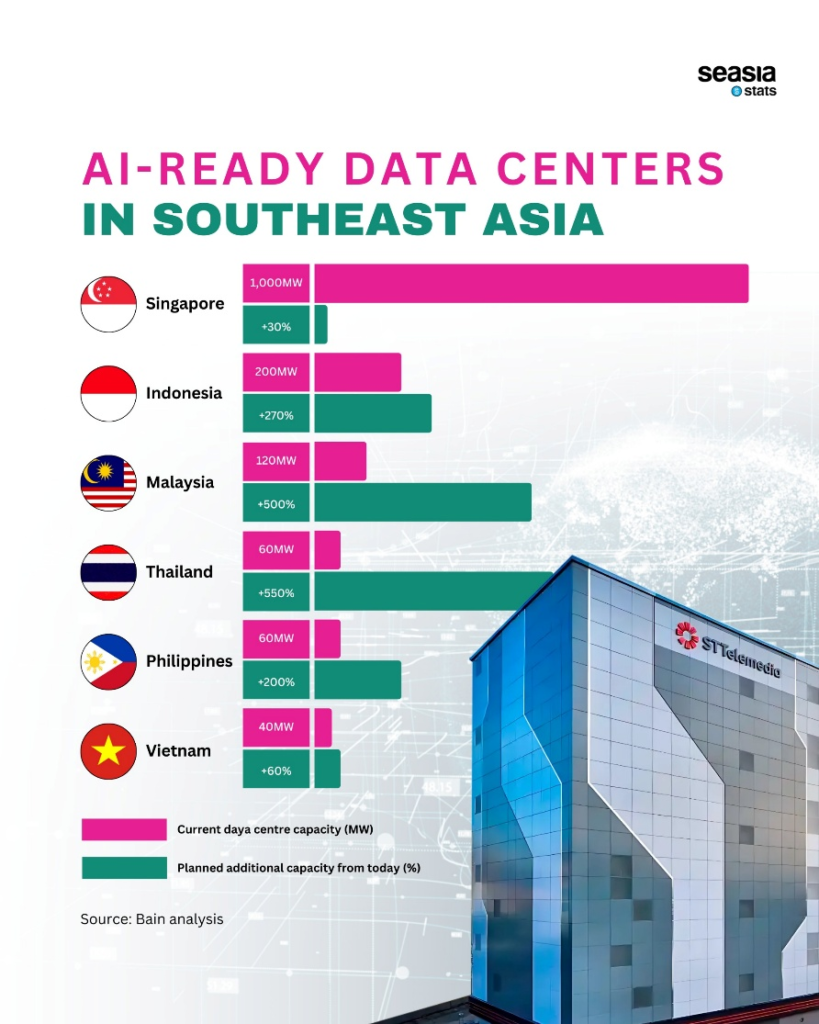
AI (Artificial Intelligence) technology has satisfactorily arrived in South-east Asia. Multiple studies claim the establishment of AI data centres and the arrival of a new arena in AI innovation, with billions of business investments from Chinese, Singaporean, Malaysian, and Thai tech giants , hyperscale infrastructure, centres of AI excellence, and increasingly AI-induced businesses in countries. This has not only marked the beginning of next-gen businesses but also growth in AI power, flexibility and enterprise resilience. However, this growth remains limited to key urban centres of South-east Asian countries.
Digital Divide
The concept of digital divide is directly connected to digital rights. Digital divide is defined as the disparity between various demographics in terms of access to technology. It poses a socio-economic disadvantage for communities susceptible to digital exclusion. Criterias such as low-income households, the elderly, women and minorities are often sidelined in this process. In Southeast Asia, this digital divide is starkly evident among rural communities. A UN report in 2019 also highlighted that while half of the world’s current population remains digitally divided, in Southeast Asia, more than 50% of the people living in rural areas lack digital infrastructure, including internet accessibility, information and communication technologies and now AI. Moreover, more than 10% of the adult demography in the region lives below the poverty line, while 5% are illiterate and 7% are above the age of 65 years. In total, about 150 million adults in Southeast Asia are digitally excluded today, which is more than 31% of the adult population in the region.
These data highlight significant patterns of the digital divide. To begin with, Southeast suffers from economic inequality, which creates a widened digital divide among its urban and rural populations. Lack of literacy, combined with an ageing population, makes most people less equipped to handle the growth of digital technologies and AI. They are not furnished well enough to deal with the rapid changes. This is why Southeast Asia’s digital divide affects the adult population of its rural areas, including villages and small towns. It also appears that due to literacy, economic and infrastructural issues, both governments and businesses have turned a blind eye to digital equality and AI literacy.
No framework or uniform training model has been developed to teach students and adults about the use of AI. Combined with poor internet accessibility, the issue of the digital divide has increased manifold in contemporary times.
Digital Rights
Human rights principles have now started emphasising governance of digital media with equality in access to the Internet and AI technologies. Digital rights are normative principles for creating an equitable distribution of infrastructure for digital communication, its knowledge and accessibility. Digital divide disrupts the realisation of human rights by barring a large chunk of the population from tools that allow digital literacy, access and usage not only for communication, but also employment and global participation. UNHRC has also termed digitisation as an important instrument for globalising human rights such as freedom of expression, economic development, political participation and societal progress. This is why digital citizenship is considered a new form of political participation through the development of internet literacy and networked relations.
Even to be involved in digital governance, online education and remote health access, digital rights are an important framework. The European Digital Framework for Citizens have encompassed new areas into digital rights, such as the development of knowledge in informational literacy, online skills, content creation and digitised problem solving. Digital rights are considered derived human rights, as access to digital technologies is a state obligation to promote positive rights.
From a positive rights perspective, policymakers are obliged to promote ease of access and limit the concentration of digital powers in the hands of a few. This is because the digital divide prevents social innovation and engagement via digital platforms among Indigenous groups, migrants, displaced people, refugees and women. Minority groups have been particularly left behind in digital connectivity, which has left them vulnerable in the digital age. With the emergence of AI, this divide will only intensify the already existing loopholes in digital rights.
Digital rights depend heavily on inclusion, which also acts as an economic enabler. Digital literacy, combined with AI knowledge, helps people acquire new opportunities in education and employment. This increases revenue and labour productivity as well. A digitally literate individual can access greater local and global markers through online media and digital transactions. It also helps them in empowering with knowledge, free communication and sharing and receiving of ideas that can help with both personal and professional growth. Especially, people equipped with digital technology skills fare better in the product and service sectors as well as tech industries, as they can employ data, software and online platforms to manage marketing and customer relationships.
Especially, emerging studies on how AI may impact the future of work, health, productivity and education make it imperative for governments to ensure digital rights and to bridge the urban-rural digital divide. It has been estimated that 50% of the workforce will be affected by digitisation in the near future. This shows that only digitally equipped citizens will experience job safety. More AI and digital literacy are also good for economies. In Southeast Asia, it has been predicted that digital inclusion and widespread literacy can open doors for huge investments and per capita growth. It can take the revenue streams from USD16 to 307 per capita across industries, including media, technology, service and financial sectors, banking, and telecom industries. This is why it is the duty of governing bodies to bridge the digital divide with infrastructure development and training, and ensure digital rights for all.
Southeast Asia’s Rural-Urban Digital Divide in AI
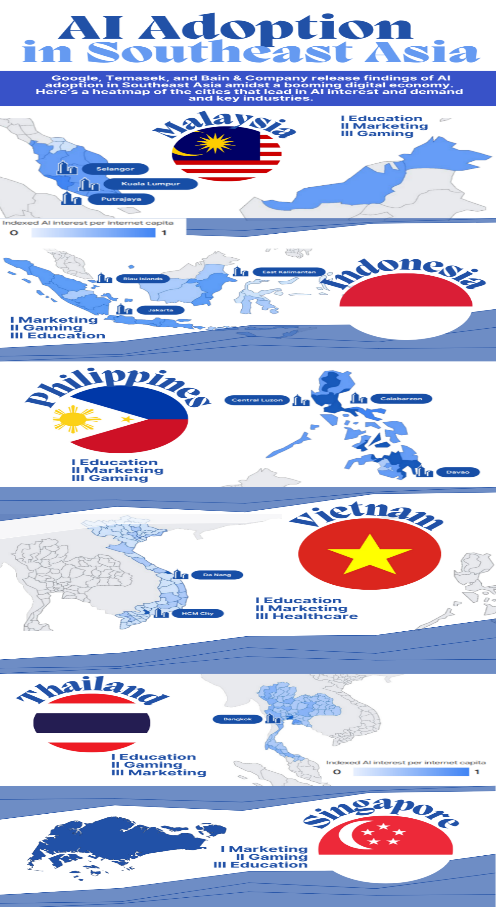
Interestingly, what can be observed here is that the urban-rural divide is a particular area that goes unnoticed when we speak of digital rights and the digital divide. The rural demographies suffer from the lack of sufficient infrastructure and networked development, which leaves them outside the developments in digital literacy, communication and growth. In Southeast Asia, major tech and startup businesses have concentrated AI’s power for economic interests, and the urban population is AI literate, while the rural population suffers from a lack of digital infrastructure and literacy that prevents them from enjoying the benefits of AI. A recently released report by Google, Temasek, and Bain & Company shows that the digital economy has made significant progress in urban locations with AI deployment in both startups and technology companies. Moreover, it is estimated that by 2024, Southeast Asia’s AI sector will be valued at USD 4 billion, while it is expected to grow three times more by the end of this decade. Yet, the beneficiaries are overwhelmingly urban, as digitally equipped youth, adults, and businesses are profiting off of the AI deployment in sales, marketing, production, finance and logistics, among other sectors.
Yet, data suggests that rural areas remain untouched by the AI boom. For example, in countries such as Indonesia and China, digital and AI investments are limited to major business cities. Moreover, internet accessibility is key to AI literacy. Even in healthcare access, the urban-rural divide in the region is too large, with the rural population having next to nothing in terms of online healthcare access, as seen during the COVID-19 pandemic. AI literacy is defined by not only know-how related training, but also identification of risks and recognition of safety measures against AI’s adverse effects, such as disinformation, fake news, doctored content and deepfakes. In Southeast Asian economies, internet access remains uneven, with notable urban-rural disparities in terms of mobile broadband, cost-effective digital access, speed, reliability, and online learning. This is especially discouraging to evolve an AI literacy environment because more than 60% of the people in countries like Cambodia, Vietnam, and Thailand live in rural areas. This has created a huge digital divide where a lack of infrastructural investment has disabled any opportunities for developing AI capability in rural areas.
However, AI literacy and merging the urban-rural digital divide requires more than just investment, but also state efforts beyond technical skills, such as building awareness about the benefits of AI through community learning and upskilling their intent, vision and analysis. Currently, rural Southeast Asia is deprived of AI knowledge, use and its integration with key sectors such as education, healthcare and marketing, while urban areas in Malaysia, Indonesia, Vietnam and Thailand have adopted AI for the same. In Thailand’s urban schools, more than 90% students have AI tools in their smartphones, while teachers experiment with new AI applications. The same are reportedly not afforded to rural children and teachers.
Bridging the Digital Divide with AI literacy
It is often remarked that Southeast Asia is so linguistically and culturally diverse that it is complex to develop an all-inclusive AI learning pedagogy. While this may be true, there is still scope to bridge the wide rural-urban gap. To begin with, embedding AI literacy to merge the urban-rural digital divide requires developing a diverse curriculum and training module for Southeast Asia’s culturally and linguistically diverse communities. AI literacy should be context-specific and culturally relevant, which requires compiling digital tools within traditional classrooms. This, of course, requires governments to build sufficient internet infrastructure so that AI applications can be used to begin with. However, this is the basic given that is the precondition of AI literacy. Having developed sufficient infrastructure, governments need to enhance student engagement and learning outcomes with region and culturally relevant knowledge instead of a general AI literacy framework.
To do this, governments also need to accept that all knowledge systems depend on multi-stakeholder participation. Including Indigenous communities and their locally built teaching and learning pedagogies, governments can navigate the issues related to promoting AI literacy in the farthest rural areas. By including local communities, traditional knowledge, teachers and local councils in the mix, a hybrid AI literacy pedagogy can be developed. This can promote collaborative efforts and the community’s readiness for AI adoption.
Another step can be taken by Southeast Asia’s AI product companies since they are best positioned to control and serve the development of AI infrastructure and tools as per regional variations. National and local governments can work with AI companies to identify the needs of rural demographies and develop the best possible infrastructure to bridge the digital divide.
Promoting rural AI literacy and merging the urban-rural digital divide can help address the opportunity gap arising in Southeast Asia’s AI sector. Data suggests that AI demand is accelerating in the region, with businesses constantly leveraging it to excel in various sectors. They are seeking AI solutions for efficiency enhancement and innovation. Yet, enterprise-scale deployment has emerged as a challenge since AI pilot studies are at their pilot stages and they lack local talent to support the sectoral demands. This problem can be linked to rural AI illiteracy in the region, which, despite its huge potential and sizable human resources, cannot contribute towards such rising demand.
Overall, AI development should benefit everyone as per the emerging digital rights framework. It is not only a human right towards equality but also important for governments and businesses since digital inclusion can promote multi-sectoral growth. It makes businesses grow and governance easier as citizens from both urban and rural areas can access AI tools to participate in the new-age developments.
References
ABI Research. (2023, December 29). Bridging the Digital Divide in Southeast Asia: 6 Stark Statistics and SatCom’s Role in Connecting the Unconnected. https://www.abiresearch.com/blog/digital-divide-statistics-southeast-asia
Enkhbaatar, E. (2025, September 1). The $550B AI Gap in Southeast Asia. And Solutions. https://andsolutions.net/blog/the-550b-ai-gap-in-southeast-asia
Ghosh, S. (2024, November 20). Infographic: A map of AI interest and demand in SEA. ET CIO. https://ciosea.economictimes.indiatimes.com/news/next-gen-technologies/infographic-a-map-of-ai-interest-and-demand-in-sea/115449344
Goggin, G., Vromen, A., Weatherall, K., Martin, F., Web, A., Sunman, S., & Bailo, L. (2017). Digital Rights in Australia. University of Sydney.
HV, V., & Lath, V. (2026, February). AI in Southeast Asia. SOA. https://www.rolandberger.com/en/Insights/Publications/Bridging-the-digital-divide.html
Karppinen, K. (2017). Human rights and the digital. In H. Tumber (Ed.), The Routledge Companion to Media and Human Rights (pp. 95-103). Routledge.
Lee, B. (2026). Bridging AI-Driven Historical Literacy and Indigenous Knowledge Systems in Rural Southeast Asia: A Hybrid Digital Pedagogy Model. Social Sciences Research, 1-8. DOI:10.5281/zenodo.19248191
Marsan, G. (2021). Artificial Intelligence in South East Asia: Upskilling and Reskilling toNarrow Emerging Digital Divides in the Post-Pandemic Recover. Georgetown Journal of Asian Affairs, 7, 57-64.
Putra, A. (2024). Governing AI in Southeast Asia: ASEAN’s way forward. Front Artif Intell., 30(7), 141-183. doi: 10.3389/frai.2024.1411838
Rashid, A., Hanif, H., Sukhri, N., & Zugic, D. (2025). Bridging the Digital Divide in ASEAN: Insights from Vietnam, Philippines, Laos, Cambodia, and Indonesia. Open Res Europe, 5(220), 1-14. https://doi.org/10.12688/openreseurope.20260.1
Roland Berger. (2021, February 7). Bridging the digital divide. https://www.rolandberger.com/en/Insights/Publications/Bridging-the-digital-divide.html
Sukoco, R. (2025, February 12). AI-Ready Data Centers in Southeast Asia. Seasia. https://seasia.co/infographic/ai-ready-data-centers-in-southeast-asia
Tan, M. (2024, September 5). Enabling Safe and Inclusive Use of AI in Southeast Asia. SEADS. https://seads.adb.org/articles/enabling-safe-and-inclusive-use-ai-southeast-asia
UNESCO. (2025, January 27). Can AI close the learning gap in Thailand’s schools? https://www.unesco.org/en/articles/can-ai-close-learning-gap-thailands-schools
Wan, A. (2023, December 11). Bridging the Digital Divide: Fostering Inclusivity in Southeast Asia’s Digital Economy. TFGI. https://techforgoodinstitute.org/insights/perspectives/bridging-the-digital-divide-fostering-inclusivity-in-southeast-asias-digital-economy/
Wotton, I. (2026, January). AI in Southeast Asia: Marginalised Learners. EdTech Hub. https://ref.opendeved.net/g/2405685/ZAIZ22IV/?src=2405685:ZAIZ22IV&collection=
Be the first to comment