The “Meme” on Your Screen

Suppose the following: the 2025 Miss World pageant in Thailand has just ended, and everyone is in the euphoria of international friendship and beauty. But just one picture by a representative of Finland, Sarah Dzafce, immediately caused a world outcry. She pulled her eyes in slants in the photo, and the caption is: Eating with Chinese people. This apparently innocent “joke of a post” soon gave a long gloomy cloud to the festivities.
To which side should we remain quiet when coming upon such a post, or shall we take the initiative and comment? Is this nothing more than personal prejudice? At face value, it is merely a post; however, in the real sense, it is an invisible deprivation of the rights of others in the online realm.
Online hate cannot be considered merely a spat between users, as Matamoros-Fernandez (2017), a scholar, reminds us. It is platformed racism; in other words, the algorithms and design processes of social media platforms become actively involved in the amplification and creation of hate. In this post, we shall apply the case of Sarah to examine the ways this invisible violence deprives us of our rights and the chilly reality underneath the technology.
Is it really just a joke?
Hitched to such a post many of us may be prompted to ask: Is it worth the fuss? Or shall we combat in the remarks? In order to provide the answers to these questions, we have to go further than the bodily act and explore one of the fundamental ideas in digital policy, which is the invisible violence and dehumanization.
Online hate may not be harmful in its direct physical confrontation, but in the form of stigmatization and dehumanization, as it is stated in the reading Facebook: Regulating Hate Speech in the Asia Pacific,.
When Sarah Dzafce makes a gesture known as the slant-eye, she is not just telling about her life, she is demeaning an entire ethnic group to a degrading physical attribute. This action deprives the victims of their dignity, making them be thought of as inferior or the subject of mockery in the online realm.
According to statistics provided by the Pew Research Center, almost fifty percent of all internet users have been victims of online harassment. This invisible violence gives a chilling effect, because it puts the victims into silence and thus deprives them of their right to engage in digital life.
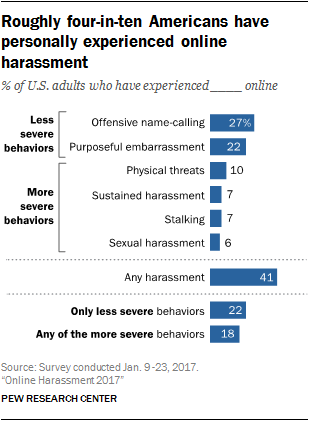
The chart indicates that causes of harassment are unbelievably varied and include race, gender, religion, and political ideology. By viewing this data, victims experience real, imminent fear, and not merely abstract numbers. This ubiquitous online damage gives the statistical basis of the Chilling Effect. This is known as the chilling effect, which means that, upon seeing or experiencing the purported intentional embarrassment or extreme harassment illustrated in the chart, people decide to keep silent or censor themselves so as to avoid further victimization.
With 41% of the users feeling threatened as Regulating platform implies, the digital space is no more a free forum to exchange ideas; rather, it is a place where people of color need to conceal their identities to stay alive.
Deprived of Power: When Online Discourse Turns into Fear
- Redefining Harm: The Loss of Agency
Speaking about the post of Sarah, we cannot concentrate only on the fact whether the victims were offended. The most severe impact of hate speech is the so-called deprivation of powers, according to the Facebook Asia Pacific Report (Sinpeng et al. , 2021). It does not imply that the victims are simply in a bad mood; the rights to engage in the society or even to express their opinion or even to be in the digital world at all are significantly reduced. It is not some interim pain, but a material loss of social engagement.
- The Tyranny of the Majority: The Power of a “Like”
Did you know that each time you tap Like on your screen, you invisibly decide who can talk in this place? Peer pressure is usually a way of accomplishing this loss of power. As the followers of Sarah flock to endorse a discriminatory post, they are building an “exclusionary” digital fence. These platformed interactions, as scholar Matamoros-Fernandez (2017) cautions, leave the victims totally isolated. This is not a simple withdrawal, as, according to the Social Media Mob (Carlson & Frazer, 2018) study, online and offline lives are inseparable to numerous communities. As the Asian woman falls into the silence due to this “invisible violence, this feeling of powerlessness is transferred into her real life where it influences her safety and dignity. This is the worst consequence: it gives certain people the liberty to bully others and deprives others of their human dignity.
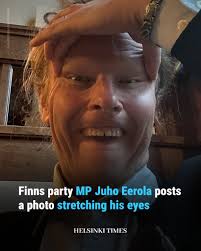
It is not only on the personal page of Sarah that this deprivation of power takes place. This power imbalance culminates when we watch Finnish politicians (as they appeared in the news) demonstratively parody this act of discrimination in order to side with Sarah. When those in authority are involved in bullying, the disadvantaged groups will feel as though the whole social system is turning its back on them. This abandonment of the online world is not a trifle. Giving the example of the Social Media Mob (Carlson & Frazer, 2018) study, the many communities cannot live separately online and offline. When an Asian woman is coerced into silence on the Internet, this feeling of powerlessness transpires to her offline, her feelings of safety, and dignity. This is the worst dimension of invisible violence: it provides certain individuals with the right to bully others and take away the right to speak.
Why do such a biased act become a political scandal on a national scale? It is not only because of the personal ill will, but because the design of social media is the firepower. It is this logic of commerce of turning harmful into an act of engagement that we should take seriously as a challenge of digital governance.
Platformed Racism: When Technology Becomes an Accomplice
Platformed Racism
The term describes a situation in which digital environments not only offer a platform on which racist discourse is practiced; but also, their technical architectures (algorithms and design affordances) are directly involved in the generation and distribution of racism.
How did the post of Sarah get away so fast? Instagram has the answer in its Ranking Logic.
Instagram explains the idea of its algorithms in the following way: the system prioritizes the content that leads to likes, saves, and quick shares. Regrettably, provocative and prejudiced information can be the source of strong emotions. As the algorithm notices the Sarah post that causes heated conversations in the comment section, it automatically classifies it as valuable trending content, placing it on the explore pages of millions. Following this reasoning, the pain of the victims is an effective traffic dividend to the platform.
1. Myth Busting Technological Neutrality
There are numerous social media that can say they are tools or channels that are neutral. But a study by Matamoros-Fernandez (2017) dispels this myth. She has coined the term Platformed Racism, and contends that racism is not a coincidental event on the internet but is instead being optimized and mediated by the commercial logic of the platform.
2. How Does the Algorithm Reward Hate?
Why might the one slant-eye gesture of Sarah go over the world? This was stimulated by algorithms. The platform mechanics are based on the content that elicits strong emotions, controversy, and great engagement. With Sarah post starting to pick up controversy and discussion, the system recognized its potential to generate traffic and promoted it to the feeds of millions. In this reasoning, platforms do not present mere messengers; they are amplifiers of discrimininatory discourse.
3. Platform Affordances and Responsibility
The platform affordances (Likes and Quick Shares) that are discussed in Regulating platform make invisible violence enormously easy and cheap to transmit. Though Sarah would go on to be punished in the real-world, including the loss of her title, the damage online had already created an indelible collective shadow via the feedback loop of the platform. This shows that technological neutrality is just a scapegoat to avoid regulation.
Cross-Case Analysis: Platformed Harm in a Global Context
1.The Shadow of Euro 2020: Systemic Discrimination Under Algorithms
Key Fact Analysis
- [00:01:15] Condemnation by Leadership: England manager Gareth Southgate described the abuse as unforgivable in the video. This proves that the unseen violence in the digital realm directly and disastrously affects the social values in the physical world.
- [00:01:30] Response of the Power Hierarchy: Prince William said that he was appalled by the racist abuse. When these incidences cause alarm among the leaders of nations, it is evidence that platformed racism has caused a challenge to national dignity and core rights of online citizens.
- [00:02:15] The Priming of Social Sentiments: Observers pointed out that fans had booed the players who took a knee in the previous round of the tournament in support of racial justice. This offline aggression was mediated by platform affordances, which quickly became large-scale cyberbullying in the post-match.
2. Digital Mobbing anonymously: The Indigenous Experience.
This is more structural damage to marginalized groups. Using the example of the Social Media Mob (Carlson & Frazer, 2018) study, Indigenous Australian youth are often targeted with a coordinated, anonymous attack when they declare their cultural identity. The anonymity feature and grouping option provided by the platform enable racists to unleash unchecked Digital Mobbing. This is in line with the rationality of behavior observed in the Sarah and Euro 2020 cases: technology enables bullies to go behind the screen, and victims who want to survive must reduce their presence on the Internet.
Towards Accountability: Under the Well-meaning Veil of So-called Free Speech.
1. The introduction of a Duty of Care.
With structural platformed racism, user self-discipline or post facto deletions cannot solely be counted upon. Woods and Perrin (2021) state that social platforms are obliged to embrace a Duty of Care. This does not imply that platforms are no longer considered neutral conduits but they should be obligated by law to avoid foreseeable harm at the product design stage, as is also the case with traditional media or in-person gatherings. As shown by the case of Euro 2020, platforms have the technical ability to filter discriminatory speech before it goes viral, but the lack of regulatory pressure is more common.
2. Reconceptualizing the Digital Public Sphere.
With reference to Regulating platform, we need to oppose Free Speech Absolutism. When individual freedom of speech is exercised at the expense of another group of people to have a right to live and to be active, then such freedom becomes tyranny. Good digital governance must demand that platforms re-tune their weights: to shift the focus on rewarding, not engagement, but the dignity of digital citizens. This is not merely a matter of technical concern but a political decision on how to allocate power.
Conclusion: Respect Matters More Than a Perfect Win
Starting with a slant-eye of Sarah Dzafce, continuing with the digital mobbing of the Euro 2020 finals, what we are looking at is not a joke, but deprivation of power that is meditated by technology. The idea of the invisible violence is perilous since it conceals itself behind the algorithms and “humor, ” slowly disempowering the marginalized groups.
Finally, what type of digital world would we like to live in? A colosseum ruled by traffic logic which favors conflict, or an actual public sphere ruled by respect and accountability? In the words of Wang Chuqin, he can hear criticism of his work, but not his character. That is what all digital citizens should strive to be: we are to celebrate the wins but more so, we are supposed to protect the last line of human dignity on behalf of one another.
References
Mo.Of.Everything. (2025). Facebook.com. https://www.facebook.com/mo.of.everything/posts/miss-finland-2025-sarah-dzafce-was-dethroned-after-posting-a-racist-gesture-draw/868009075601129/
Duggan, M. (2017, July 11). Online Harassment 2017 | Pew Research Center. Pew Research Center. https://www.pewresearch.org/internet/2017/07/11/online-harassment-2017/?gad_source=1&gad_campaignid=22378837192&gbraid=0AAAAA-ddO9FZM5WQ2IeLC-Y_E3D5n2vnY&gclid=CjwKCAjw4ufOBhBkEiwAfuC7-Uu2JNjWWcaT2orH-keV3YHNxL8S48laTGa1ezCW8OhglFDjwnUjURoCt64QAvD_BwE
Helsinki Times – Finnish MP Juho Eerola, chair of Parliament’s… (2016). Facebook.com. https://www.facebook.com/thehelsinkitimes/posts/finnish-mp-juho-eerola-chair-of-parliaments-legal-affairs-committee-has-drawn-cr/1311379801004142/
Tara. (2025, December 12). Finns Party MPs criticised over new images mocking Asians. Helsinki Times. https://www.helsinkitimes.fi/finland/finland-news/domestic/28306-finns-party-mps-criticised-over-new-images-mocking-asians.html
Woods, L. (2021). Obliging Platforms to Accept a Duty of Care. In Martin Moore and Damian Tambini, M. Moore, & D. Tambini (Eds), Regulating Big Tech : policy responses to digital dominance (pp. 93–109). Oxford University Press.
Global News. (2021, July 12). English players targeted by racist attacks after Euro 2021 loss to Italy. YouTube. https://www.youtube.com/watch?v=u9ntlttjr2c
Sinpeng, A., Martin, F. R., Gelber, K., & Shields, K. (2021). Facebook: Regulating Hate Speech in the Asia Pacific. Department of Media and Communications, The University of Sydney. https://hdl.handle.net/2123/25116.3
Bronwyn Carlson and Ryan Frazer. (2018). Social Media Mob: Being Indigenous Online. Macquarie University. https://research-management.mq.edu.au/ws/portalfiles/portal/85013179/MQU_SocialMediaMob_report_Carlson_Frazer.pdf
Matamoros-Fernández, A. (2017). Platformed racism: the mediation and circulation of an Australian race-based controversy on Twitter, Facebook and YouTube. Information, Communication & Society, 20(6), 930–946. https://doi.org/10.1080/1369118X.2017.1293130


Be the first to comment