Video from:https://www.youtube.com/watch?v=ZIoVl0HoXdQ
I never thought a short video would stay in my mind like this, and yet it has.
The woman in the video talks about her experiences using social media sites. What is noticeable is not what she is viewing; it is how she is viewing it. She tells the interviewer in the video that she wasn’t searching for disturbing content; she is just a normal user.
She says: “I was really scared.”
This line may not mean a lot to most people, but it can change the way we think about social media in a big way. It does this by hinting at a big idea:
Maybe the user isn’t choosing what they see. Maybe what they see is choosing them.
A real case: when content becomes environment
There are some things about mental health that we need to discuss. Sometimes people want to open up about their sufferings, confusions, and fears.
If we do not do this, it could be even worse. But the reality is that this is not an occasional problem; it is a constant problem. When the same posts come up again and again, when they’re recommended and boosted and repeated, something changes.
“It no longer becomes a form of expression.
It begins to become a form of environment.”
Molly’s family viewed this information in a completely different light. They didn’t see that people were expressing themselves when they viewed this information repeatedly. They thought that it was hurting them.
As I have mentioned, this is the crux of the matter, as this information can be viewed as a form of expression or a form of harm.
That is exactly why the case of Molly Russell remains so powerful.
Molly Russell was an adolescent in the UK who had used the internet extensively, coming across numerous postings concerning depression, self-harming, and suicide before her passing away. According to the BBC inquest report, the girl had saved, liked, or shared 16,300 Instagram posts in the six months before her death, including 2,100 related to the topics of depression, self-harm, or suicide. The same article notes that a Meta spokesperson told the court the content was “nuanced and complicated” and that it was “safe for people to be able to express themselves,” and that most of the postings were viewed by him as a possible “cry for help.” However, according to Molly’s father, things were not so simple. It is claimed that although his daughter had expressed her feelings online, she had done so to “an empty void.” In this case, what she stumbled upon may not have been just a term; it could have made self-injury seem more common and acceptable.
What are we seeing when self-harm, depression, suicide, and emotional problems appear online? Are these just people venting and crying out for help and wanting to feel connected to something greater?
Will this become a larger problem if this continues to come up on the internet due to some unknown algorithm?
The grey area: expression or harm?
On one hand, this content can serve as a venting space where people can share what they are going through. It is not necessarily a bad argument because a person having a hard time needs a place to vent out their pain.
If all signs of despair and self-harm are removed instantly, social media may only be left with “okay” or positive feelings, and suffering may be taken even deeper underground. So, there’s still a need for freedom of expression.
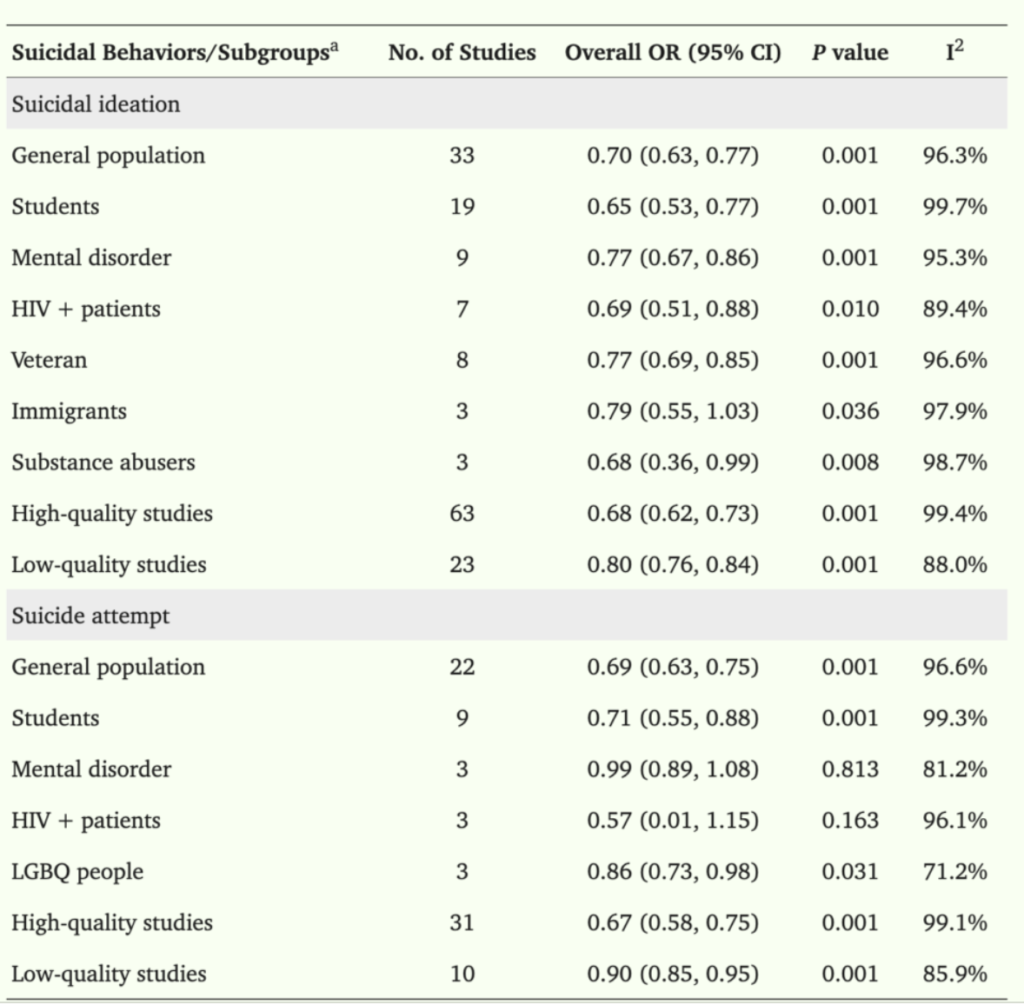
There is existing research that proves this, showing that social support is associated with a significantly lower risk of suicidal ideation and suicide attempts, meaning that there are places where people can vent and get support.
Figure 1. Social support is associated with lower risks of suicidal ideation and suicide attempts across different groups.

Picture from: https://pmc.ncbi.nlm.nih.gov/articles/PMC11264453/
As we can clearly see in the data above, people who are more supported in their social networks experience a reduction in risk of about 30% when it comes to contemplating or attempting suicide. This means that “spaces where people can vent about their problems and connect with others” could be a protective factor.
At times, just a platform to discuss pain, fear, or loneliness may make a positive difference, stand out, or even save the life of a person.
However, there is a harder fact that has to be taken into consideration.
There are no neutral expressions when they are inserted into algorithmic systems.
When expression becomes environment
A post seen once is one thing. Another post was viewed fifty times. A troubled teenager who encounters a single hard image is not in the same boat as a teenager who always encounters dozens (or even hundreds) of hard images and messages. This means that, though every post is justifiable as an expression, the very climate might be made unhealthy. That is the point. Harm on the Internet is not necessarily caused by a single obviously unlawful piece of content. It may arise out of accumulation.
So, I don’t think we can really say that the question here is whether or not this post should be allowed to be online. What we really need to ask is what happens if this platform continues to decide that this is something you should see next.
Social media ceases to be social media and begins to covertly affect our thought and feeling processes.
Social media is perceived as a platform to express ourselves and to have chats. But this is no longer the case. Social media is sorting, ranking, censoring, and directing our expression. It is not just the host; it is making us feel, filter, and regulate our emotions.
Not about free speech, it is just. It is also about who has a say on what we actually listen to.
One may share a story in hopes that people will know. Another may be targeted not by choice, but by a machine designed to serve up emotionally spicy content in hopes of keeping people watching. One shares their own anguish; another’s anguish is fuelled by a machine designed to elicit feelings in viewers. When these two are together, the intent is no longer simply helping people talk; it’s designed to make people feel.
That is why the idea of a cry for help that appeared in the case of Molly Russell is problematic. A scream should be a call to action to help, but what’s posted on social media is a sharing, editing, duplication, and retweeting of millions of screams into your feed. A basic human instinct is turned into a visibility economy. And that is where the moral boundary becomes blurry.
Platform responsibility
As this concept is evolving, another question comes to mind, which we can’t ignore:on grows more difficult to forego:
Who is responsible for these environments?
You can see this in the latest coverage from the BBC reporting. It’s not just judging this platform on its own merits, but it’s judging this platform in relation to how these spaces work.
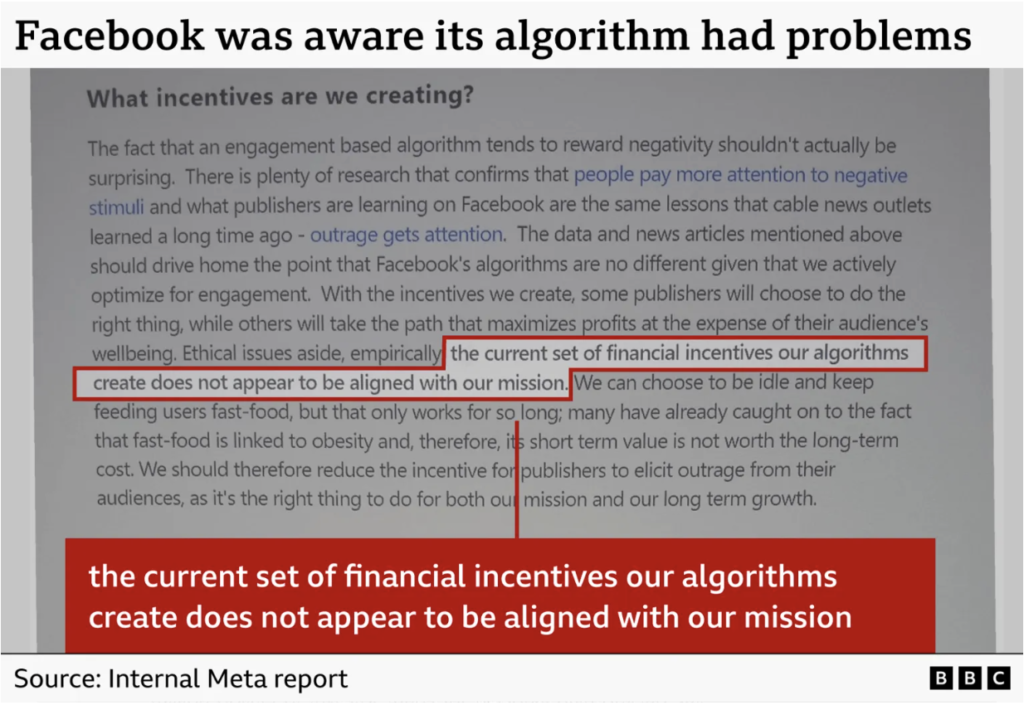
This is a shift in how we think about these spaces, and I’m uncomfortable with this, as they are using this word balance to talk about this difficult content, when their business model is based on engagement. They say they believe in free expression, they want to protect people from harm, but there is a lot of content, and this is not a knock on them. There is a lot of content, and this is the most provocative, which gets the most views, comments, shares, etc. Although this does not mean every harmful feed is the result of deliberate malice, it does mean that commercial incentives and user safety do not always point in the same direction.
And such tension is significant.
So, once you realise that a site is making money off these posts that are emotionally charged, it’s difficult to trust them to make the right decision. When a company is making money from views, comments, and shares of these posts and is also the company that decides safety, there is a conflict of interest.
Picture from: https://www.bbc.com/news/articles/cqj9kgxqjwjo
This is also why this latest reporting and legal action is so important. The fact is that society is no longer willing to treat these platforms as middlemen. They’re seen as actors. And that’s important because it means that we’re starting to think about this issue in different terms. Rather than simply focusing on ways that users need to make better choices, we’re starting to think about something else. What kinds of environments are being created for users? When we think about it that way, our solutions start to look different.
When this issue is framed in such a manner, the question of the agenda on how to respond to it also starts to change.
Rethinking solutions
There’s also been debate over how to respond.
And once we start to think in terms of environments rather than individual choices, there’s also something else that we need to think about. The fact is that kids and teens don’t consume online content in the same way that adults do.
Adults can be deceived, too, but kids are not good at detecting these things. So, if a teenager is already lonely, unsure of themselves, under pressure, or simply curious, it is really hard to distinguish between “nice, helpful chat” and “harmful reinforcement.” The excuse that no one wants anyone to self-harm is not really a good excuse when the site is still showing younger folks this sort of content.
It is not just about deleting a few posts that violated a certain rule.
It is about the complete context of what these social media sites offer, what they show, highlight, and pass on to young users.
If these social media sites are using algorithms to create a certain vibe for users, then they should own up to it.
It is not just about deleting illegal content; it is also about how everything is presented and spread out.
This can be clearly seen in how we are discussing how to better regulate these social media sites. It is not about how we can stop kids from using these social media sites; it is about how we can limit the content on these social media sites.
It is not about whether people are using social media; it is about what they are viewing on these social media sites.
BBC News says there is growing pressure on social media companies to take responsibility for the kind of environment they create and how they follow safety rules, which can cost them financially if they do not take these rules seriously.
So, the real question is who is actually responsible for these websites. We are not just talking about the content that promotes self-harm. We are also talking about product safety. But according to a Reuters report, regulators are not falling for the excuse that these websites are just ‘middlemen’ and are trying to avoid responsibility.
Reuters also says that the EU is planning new regulations that could lead to these websites being fined if they don’t comply with safety regulations. The websites could even be fined up to 6% of their turnover.
Again, the problem is not just about self-harm. The problem is about safety. And that is important because it is a part of a wider trend. The problem is not just about these websites.
The problem is that these websites are not bystanders anymore. They have to own up to it.
The problem is that regulating content is not the same as regulating a product. A product can be tested in a very clear-cut fashion. But a post cannot be tested. The post is dependent on a few different variables, such as context, time, and even how many times it is repeated.
Conclusion: where is the boundary?
Everyone is acting as if we just need to get rid of all the disturbing content, but that’s not true, and that’s not really fair to people who are sharing their struggles with us. And another thing, just because a recommendation system doesn’t tell you what to do doesn’t mean it’s safe.
So, that grey area is where the real issue is.
The drama on social media is right in your face, still dressed up as normal. It feels private, but it’s really a push. It feels supportive, but it spreads like a show. It can start with one person’s pain and trigger another person. And then, when the algorithm is involved, it’s not even about what people are saying anymore; it’s about what is being done with those words.
So, the issue isn’t that hard feelings don’t belong on social media. They do belong. The issue is that social media shouldn’t be able to take those hard feelings and turn them into something that is infinitely shareable and highly engaging, then act as if they’re not responsible for that.
So, the boundaries are important.
Not because they’re easy to define, but because leaving it up to social media is just too risky.
Reference list:
BBC News. (2022). Molly Russell: Social media and suicide content examined at inquest. https://www.bbc.com/news/uk-england-london-63034300
BBC News. (2022). Molly Russell inquest: Pinterest executive admits site was not safe. https://www.bbc.com/news/uk-england-london-62991510
BBC News. (2026). Meta and TikTok let harmful content rise after evidence of outrage drove engagement, say whistleblowers. https://www.bbc.com/news/articles/cqj9kgxqjwjo
Darvishi, N., Farhadi, M., & Poorolajal, J. (2024). The role of social support in preventing suicidal ideations and behaviors: A systematic review and meta-analysis. Journal of Research in Health Sciences, 24(2), e00609. https://pmc.ncbi.nlm.nih.gov/articles/PMC11264453/
Reuters. (2026, March 27). EU reaches deal to fine online platforms importing products deemed unsafe.https://www.reuters.com/sustainability/eu-reaches-deal-fine-online-platforms-importing-products-deemed-unsafe-2026-03-26/
Robinson, H., & Howard, A. (2025). Kids exposed to social media posts about violence and suicide, BBC investigation finds. BBC News. https://www.bbc.com/news/articles/c0r1gpr0ezwo
YouTube. (n.d.). Oil trading spikes before Trump’s Iran remarks [Video]. YouTube. https://www.youtube.com/watch?v=ZIoVl0HoXdQ
Be the first to comment