When Platform Safety Becomes User Labour
This video points out that in many cases, cyber harassment is gradually formed through repeated occurrences, exposures and interactions on social media platforms. This clarifies the core point of this article: although the platform regards its reporting system as the main protective response, users will still feel uneasy after completing the reporting process, which may even increase the burden.
If you encounter online harassment, the platform will usually give a very simple suggestion process: report, block users, mute accounts, and then continue to move forward. The platform is to use these tools to maintain the security of cyberspace in a simple way. On the surface, this seems reasonable. After the harmful content appears, the user reports it, the platform reviews it, and the problem should be solved. In the policy discourse, this sounds like protecting users. But in fact, it is difficult to fulfill this promise. Because for many users, especially those who have been repeatedly sexually harassed or become the target of sexual harassment, reporting cannot give them a sense of security at all. The post may be deleted, the account may be banned, or the system will automatically prompt that the report has been received. But the overall feeling and experience of being targeted may not change. Because harassment may continue to occur through new accounts, repeated replies, forwarding, quoting posts, or a wave of hostile attention from multiple users. In the end, users are likely to feel that they can only solve such problems by themselves, but it is difficult to deal with them alone, which will lead to users’ distrust of the platform.
This gap is crucial because “network security” has become one of the main bases for the platform to define its responsibility to users. The word “security” appears in community guidelines, trust and security teams, reporting systems and public statements. However, after using it, users will find that the use of the system is far less effective as the platform’s propaganda.. As Flew (2021) and Roberts (2019) pointed out in different ways, digital platform governance often relies on technology and program systems. Although these systems are good at processing content, they have little effect on understanding complex and persistent forms of harm. This article believes that reporting cyber harassment rarely makes people feel protected, because the reporting system often regards harassment as isolated content, rather than a persistent, situationally related and usually organized form of harm. As a result, these systems often shift the responsibility for ensuring security to users, but make little change to the broader environmental conditions that promote abuse.
Reporting does not mean protection
One of the main reasons why reports are often ineffective is that online harassment is rarely limited to one offensive comment. More often than not, it is cumulative, repetitive, and affected by specific situations. Users may continue to receive hostile replies for hours or days, witnessing the accumulation of abusive comments under a post, or become the object of mockery, intimidation, sexist remarks, racist remarks, and even organized siege. In this case, the harm not only comes from a certain content, but also from the overall experience caused by long-term exposure to repeated hostility.
As Flew (2021) pointed out, cyber injury cannot be simply understood as individual communication behavior out of a broader context. It needs to be seen as part of the broader media and governance environment. Because harassment is often caused by repetition, this is very important. A few malicious comments received at first may only be disturbing, but many accumulated malicious comments may cause deeper fear and fatigue, and may even force victims to withdraw from the participation completely. That’s why many users describe cyber harassment as a hostile environment rather than a single incident.
Flew (2021), Massanari (2017), and Matamoros-Fernández (2017) all point out in different ways that the platform context is crucial in shaping digital damage. Harassment is not only created by individual users, but also shaped by visibility, communication, algorithm amplification, and platform culture that may promote conflict and hostility. This shows that in fact, the real problem may not be a post, but a pattern. When the platform requires users to report one by one, it actually forces them to disassemble a wider range of harmful experiences into isolated fragments. Although this makes it easier for the system to deal with harassment, it is more difficult to truly understand its nature.
As shown in the two pictures, it can be seen that the platform’s response to harassment is limited to limited user operations such as reporting, blocking and muting. Although these options are important, they also expose the platform’s narrow understanding of damage: that is, it is believed that damage can be managed by marking individual content and taking individual defensive measures.
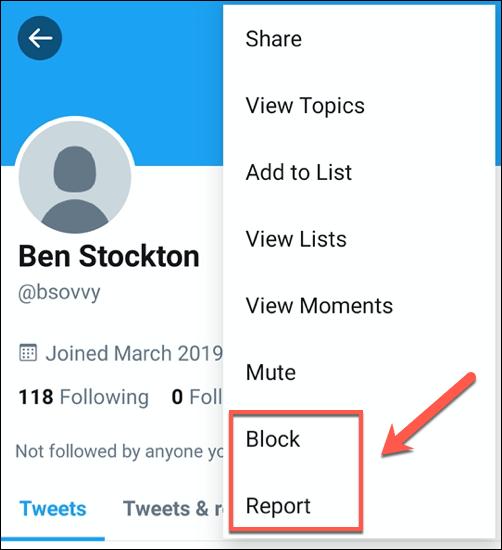
Source: Twitter (X)
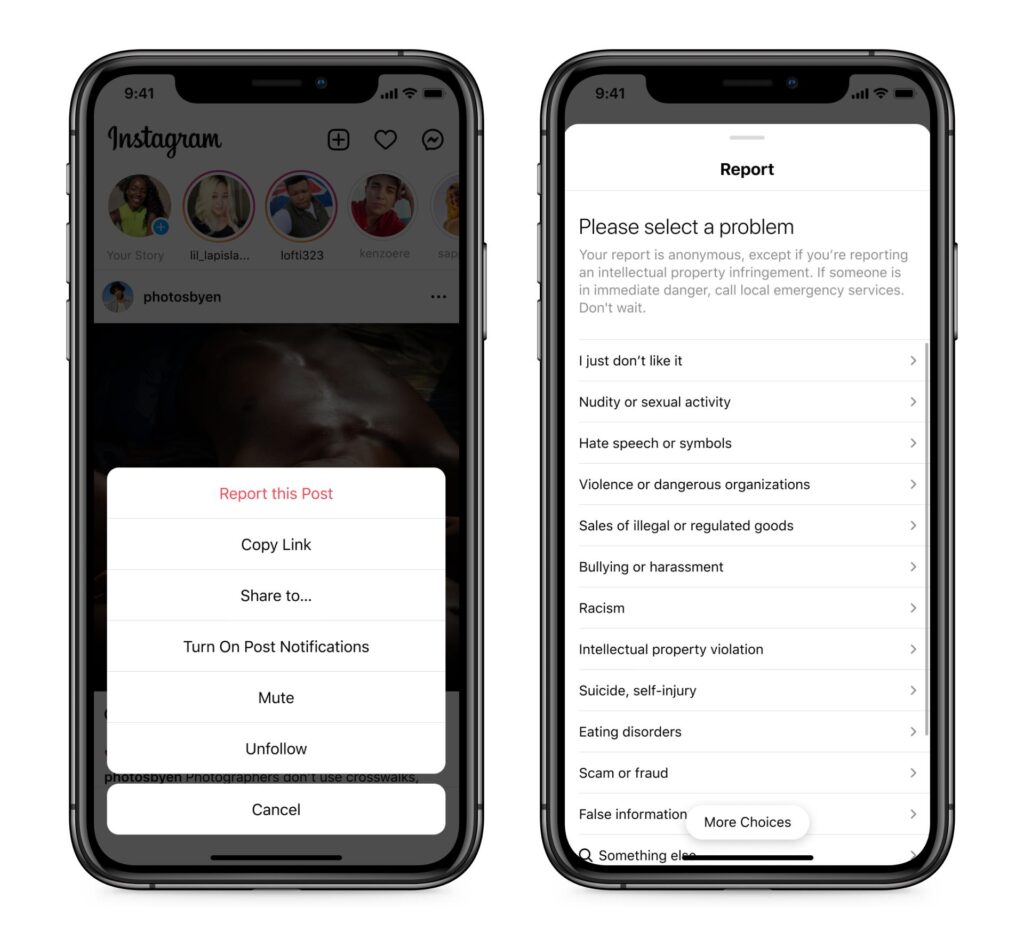
Source: Instagram
The reason for the protection gap is the disconnect between the actual experience of harassment and its handling. The reporting system seems to be working, but users are still placed in the same hostile environment. A comment disappeared, but the harassment continued. A message was deleted, but the targeted attack still existed. In this sense, reporting may only be a procedural response and fails to become a meaningful protection.
The real problem that the platform has never seen
This reflects a deeper problem in platform governance. In fact, the reporting system only deals with a very specific question: “Is there any violation of this content?” This standard is very convenient for content review, but when dealing with online harassment, it often fails to grasp the key points. In many cases, the real problem is not to delete a few obviously malicious comments, but whether a user is suffering from continuous attacks, humiliation and pressure for a long time.
Roberts (2019) pointed out that the content review system was originally designed for scale, efficiency and standardization. The platform has to process a large amount of content every day, so the system is better at quickly finding single posts, comments or messages and then classifying them. From the perspective of operation, this method is reasonable, but it also has obvious limitations: it is not good at dealing with injuries that are continuous, cumulative, and dependent on specific situations. Online harassment is not always the obvious violent language or abuse. Sometimes, it manifests as repeated hostility, irony, yin and yang, group siege, or a lot of malicious content that is not serious to look at alone, but accumulates unbearable.
This is not an accidental error of the system, but the structure of the platform itself. Social media platforms rely on systems built for speed, scale and user participation. They are good at handling massive posts, comments and interactive data, but not good at understanding the social meaning behind these interactions. That is to say, the platform may be able to delete obviously illegal content, but it often fails to deal with the overall model that makes users feel uneasy and targeted.
What’s more troublesome is that the platform mechanism itself will also amplify this damage. The platform not only “carries” content, but also determines which content is more visible. Those contents that can trigger strong emotions and a lot of interactions will often be further pushed, whether through replies, forwarding, recommendation algorithms, or various interactive data. Therefore, harmful content often gets more exposure because it is “more responsive”. In the harassment incident, this will make the original one-on-one attack slowly turn into a larger-scale collective incident involving more people. A hostile reply may turn into a whole series of discussions; a forwarding may attract siege; a targeted comment may also become the beginning of a wave of organized attention.
Therefore, online harassment can not only be regarded as a “content problem”. It is also a problem of visibility, platform design and governance. If the platform continues to understand the injury as an isolated illegal content instead of a recurring behavior pattern, the reporting system will always have structural defects. They may be able to handle reports, but it is difficult to really protect users.
When safety becomes work
In fact, reporting this matter itself will put a great burden on the victims. The platform usually regards reporting as a tool that can help users protect themselves. It seems that as long as the report is reported, the problem can be dealt with. But in reality, things are not so simple. In many cases, victims need to spend a lot of time and energy to deal with these steps.
They not only need to find out the problematic content by themselves, but also take screenshots, save records, report relevant posts one by one, and even report multiple accounts at the same time. Sometimes, they have to explain the ins and outs of things to the system, but these systems are often not good at understanding complex harassment situations. In this way, the report not only does not reduce the pressure, but may make the victims face the content that hurts themselves again, bringing them more burden.
As Roberts (2019) pointed out, the content review system relies on classification. Therefore, users must transform those chaotic, painful and persistent experiences into categories that the platform can handle. This may mean judging whether an interaction is “harassment”, “hate speech”, “threat”, or something else. When abusive behavior is derived from multiple posts or comments from different users, it may mean that the process needs to be repeated over and over again.
This constitutes a phenomenon that can be reasonably called “user labor”. Users are not only harmed, but also forced to bear the responsibility of recording, sorting out and managing such injuries. This will bring a huge emotional consumption. In some cases, the reporting itself forces users to repeatedly expose abusive content, thus prolonging the exposure time rather than reducing it. Users do not feel protected, but will feel a heavy burden, which is undoubtedly a great pressure for users.
From a broader perspective, it also changes people’s perception of responsibility. If security mainly depends on whether users can successfully report content, then security has become something that users must create by themselves. The platform claims to provide tools, even if these tools cannot solve the root of the problem. In this way, people will not continue to pay attention to the problems of platform design, content review mechanism and interactive system itself, and the responsibility will be pushed back to individuals. From this point of view, the reporting mechanism not only failed to really protect users, but also turned “protection” into something that users themselves must fight for and bear.
A Case Study in Failed Protection
The experience of Indian journalist Rana Ayyub explains these problems very well. Over the years, she has been subjected to continuous cyber harassment, including sexist abuse, rape threats, false information, personal threats, and a series of organized attacks. The purpose of these attacks is not only to hurt her personally, but also to slander her, intimidate her, and make her unable to speak out in public space. Reporters Without Borders (2024) listed her case as one of the most prominent examples of online harassment against female journalists, which also illustrates how digital violence is used to suppress public voice.
This case is particularly representative because it causes far more harm than a post or a message itself. The real problem is that this kind of harassment is repeated, publicly visible, and continuously accumulated. It spans multiple platforms and expands over time, finally forming a continuous atmosphere of pressure and fear, instead of an isolated event that can be solved after a simple report. This is exactly the typical situation that the reporting system can’t deal with. Users can report a threatening reply or an abusive post, but this is of little help in dealing with the ongoing hostile offensive.
As shown in Figure 3, cyber harassment often manifests as repeated, open and cumulative abuse, rather than isolated events. That’s why reporting a single post is often powerless: the system only responds to fragmented fragments, and the victim’s actual damage is much deeper than any single fragment.
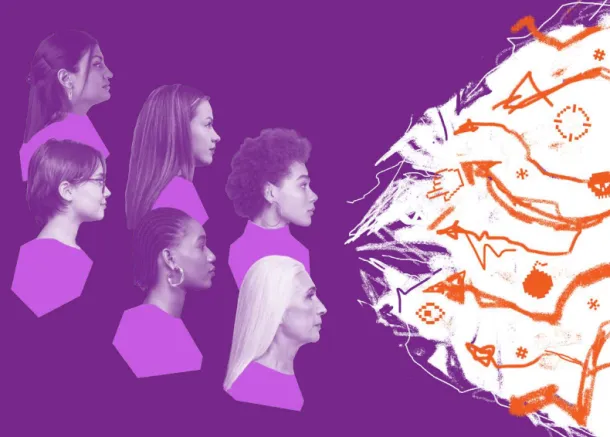
Source: UNESCO (2025). Image credit: Luiza Maximo and Unsplash/Freepik.
Ayyub’s case also reflects a more common phenomenon. Female journalists, female activists and female public figures are often harassed, which is not only persistent, but also amplified at the social level. Once a user is clearly marked as a target, the malicious attention to her will increase exponentially. The problem is not only that the content itself is harmful, but also that its dissemination and repetition make the parties more and more exposed to the public eye. Against this background, the reporting system seems to be weak and responds passively. These systems are not designed to curb the deep roots of harassment, but only to deal with the traces of individual harassment incidents.
What Real Protection Would Require?
This does not mean that the reporting tool is completely useless. In some cases, they are necessary and help remove obviously harmful content. However, it should not be confused with comprehensive protection. Reporting can be a part of network security, but it is not the same as security in itself.
If the platform really wants to deal with harassment more effectively, it can no longer regard the harm as a separate illegal content. They need to establish a system that can identify repeated targeting, coordinated action and cumulative injuries. At the same time, the platform must also admit that its own design itself – including the visibility of the content, the recommendation method and the interaction mechanism – may also amplify these injuries to a certain extent.
More importantly, the platform can no longer turn security into something that requires users to constantly spend time and energy to maintain. Real protection should reduce the burden on users, not put more responsibility on them. This means that the platform needs to deal with the structural problems that make the damage continue to occur, instead of waiting for the injury to occur and then asking individuals to report those scattered content again and again.
Conclusion
Reporting online harassment alone cannot really bring protection. It only deals with superficial problems, but does not solve the root cause. The platform often focuses on individual content, rather than how the damage is constantly repeated, accumulated and spread, so it is difficult to really respond to the continuous damage experienced by users. In many cases, what users get is not a sense of security, but just a processing process that seems to be in operation.
To put it more directly, for many people, reporting is not so much a way to protect themselves as a continuous burden. They have to find problems by themselves, save evidence, explain what happened, and face the content that hurts them again and again. But at the same time, the larger environment that keeps causing these injuries has not changed. If the platform continues to regard reporting only as the core way of network security, it will be difficult for them to provide real protection. Real security should be based on a more comprehensive understanding of harm, that is, recognizing that harassment is often cumulative, related to specific situations, openly visible, and deeply embedded in the operation mode of the platform itself.
References
Flew, T. (2021). Regulating platforms. Polity Press.
Massanari, A. (2017). #Gamergate and the fappening: How Reddit’s algorithm, governance, and culture support toxic technocultures. New Media & Society, 19(3), 329–346. https://doi.org/10.1177/1461444815608807
Matamoros-Fernández, A. (2017). Platformed racism: The mediation and circulation of an Australian race-based controversy on Twitter, Facebook and YouTube. Information, Communication & Society, 20(6), 930–946. https://doi.org/10.1080/1369118X.2017.1293130
Reporters Without Borders. (2024, November 27). Rana Ayyub: India’s women journalists face cyber-harassment. https://rsf.org/en/rana-ayyub-face-india-s-women-journalists-plagued-cyber-harassment
Roberts, S. T. (2019). Behind the screen: Content moderation in the shadows of social media. Yale University Press.
Be the first to comment