“Technology is neither good nor bad; nor is it neutral.”
https://www.jstor.org/stable/3105385?seq=2
Melvin Kranzberg, 1986
A quick note from the editor
Imagine opening your laptop and producing a complete advertising campaign in minutes: a marketing script written by AI, images generated instantly, background music composed automatically, and a video edited without human intervention. What once required teams of writers, designers, and editors can now be produced by a single user with generative AI tools.
In recent years, technologies such as ChatGPT and AI image generators have dramatically lowered the barriers to content creation. As a result, digital platforms are increasingly filled with AI-generated text, images, music, and videos. While this transformation democratizes creativity and enables more people to participate in digital media production, it also raises an important question: what happens to professional content creators when machines can produce content at scale?
This blog examines how generative AI is reshaping creative labour and explores the governance challenges it raises for copyright, platform regulation, and the future of digital work.
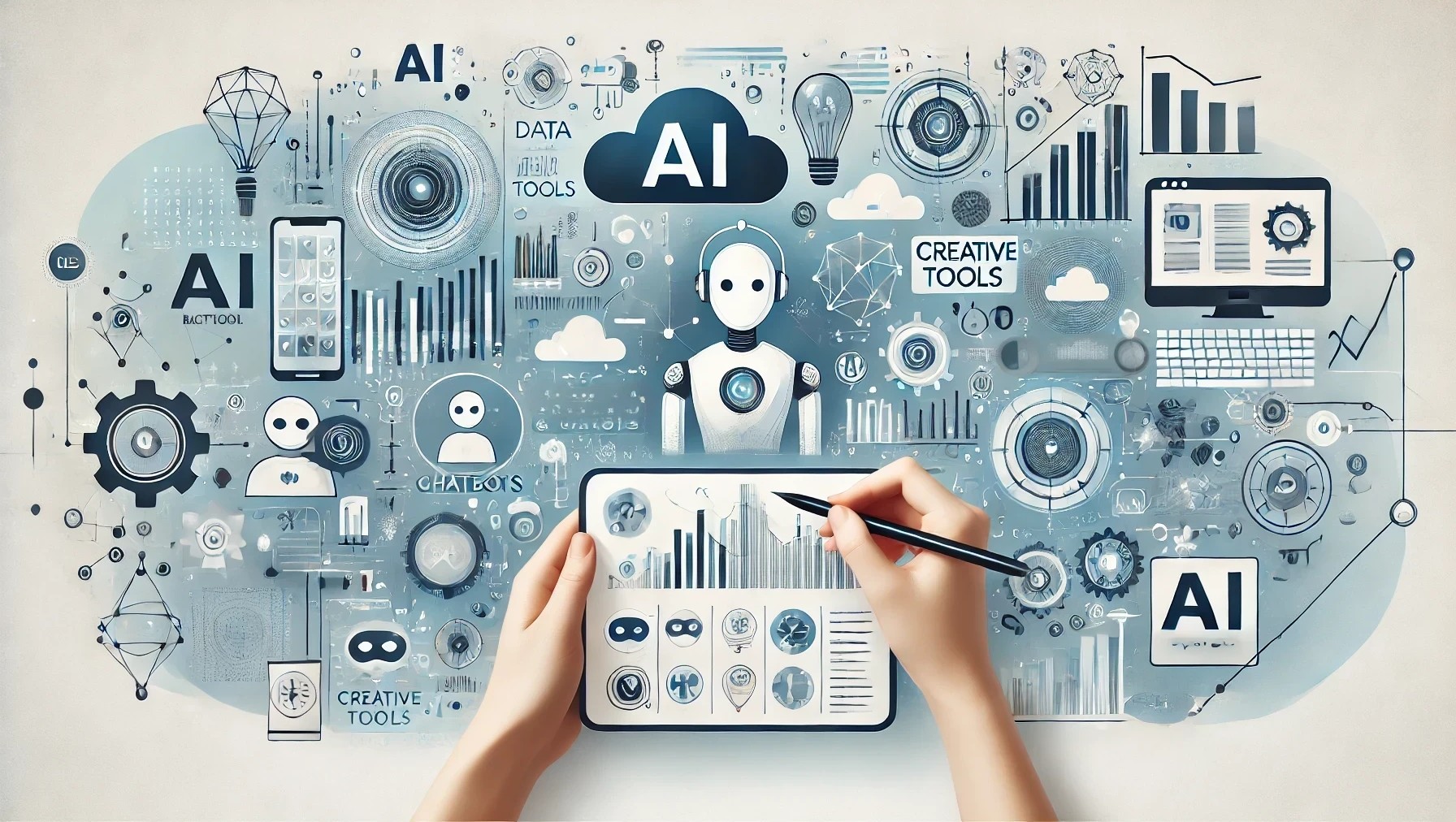
In today’s era of information overload and rapid internet development, AI has become the hottest topic in technology in recent years. We are faced with countless AI-related updates every day—whether it’s large language models (LLMs), AI agents, or AI applications across various industries. Under this wave of change, everyone—especially professional content creators—has been thrust into the forefront of the AI revolution: it seems that in this era, failing to embrace AI means being left behind by it.
In 2022, AI text-to-image software, represented by Stable Diffusion and Midjourney, first ignited public enthusiasm. In November of the same year, OpenAI released ChatGPT, triggering a qualitative leap in the capabilities of general-purpose LLMs and thereby sparking a global boom in generative AI. Subsequently, with the emergence of more powerful models like GPT-4 in 2023, generative AI entered its “year of application explosion.” Fast forward to today, the launch of products like GPT-5.3 Codex, Seedance 2.0, Suno-V5, and Nano Banana Pro symbolizes generative AI’s latest breakthroughs in programming agents, multimodal video, professional audio, and high-resolution imagery. Its content production capabilities are gradually evolving from supplementary tools into productivity tools.
At the same pace, the internet era has propelled a wave where everyone can become a content creator. Tasks that were once the exclusivity of professional content creators can now, with the help of generative AI, be accomplished by anyone producing copy, images, music, and videos that can rival professional-grade work. As a member of the creative industry, I inevitably ask: Will generative AI replace professional content creators?
However, extensive literature suggests that while AI may not fully replace human creators, it is increasingly transforming the nature of creative labour and reshaping the role of humans in communication and information production. As Andrejevic (2020) notes, artificial intelligence “robotizes mental labor” by augmenting or even displacing human roles in communication and decision-making.
The rise of AI-generated content
The emergence of generative AI has completely revolutionized the way content is created, particularly in the generation of text, images, music, and video. First, in the realm of text generation, AI tools (such as GPT-4 and Claude 3.5) have evolved from simply “autocompleting” human instructions to becoming tools capable of in-depth storytelling and professional analysis. This shift has significantly lowered the barriers to entry for creative writing, journalism, and coding, but it has also brought a series of governance challenges, such as the mass production of misinformation and the ambiguous definition of “authorship.”
Second, in the realm of image generation, AI tools led by Midjourney, DALL-E 3, and Stable Diffusion have completely transformed the visual arts industry while simultaneously impacting the employment landscape for visual artists. With the help of these generative AI tools, the hand-drawing skills that creators spent a decade honing are no longer paramount. If people possess the ability to precisely issue prompt engineering instructions to AI, anyone can generate high-quality illustrations, design drafts, or photographic works. However, this also brings significant ethical challenges, such as copyright infringement in training datasets and the risk of deepfake images.
Third, in music production, models such as Suno, Udio, and Google’s Lyria enable non-professionals to create complex musical arrangements. AI can mimic specific musical styles, rhythms, and even the vocal characteristics of specific artists, thereby enabling fully automated composition, lyric writing, and singing. However, this has also sparked controversy regarding the protection of artists’ vocal characteristics, as well as concerns that the proliferation of AI-generated music on streaming platforms is squeezing human artists’ royalty income and market share.
Fourth, in video production, with the emergence of models like Sora and Veo, the industry is approaching a “Pixar moment.” Just as Toy Story transformed the cost structure and creative logic of the animation industry, generative video AI is driving the production cost of digital content toward zero. This forces policymakers to reexamine labor protections and copyright governance within the traditional film and television industry. When AI can generate videos indistinguishable from real ones, it transforms from a “fun demo” into a “governance challenge,” further raising issues of social trust.
In addition, a study by Goldberg and H. Tai Lam of the University of California, Los Angeles, indicates that the entry of AI technology into the creative industries will also lead to the problem of AI-generated content displacing human works in the market (Waikar, 2025).
Impacts on professional content creators
For professional content creators, while generative AI tools empower them and boost efficiency, they also pose challenges such as diminished value of their work and market saturation.
First, it is undeniable that the emergence of generative AI tools has helped improve production efficiency in content creation. AI handles a significant amount of repetitive tasks, such as rough video editing and style-based image filling. This frees professional creators from tedious technical tasks, allowing them to focus their time on strategy and storytelling. Second, the use of AI tools helps reduce production costs. For example, in large-scale productions like music and film, extensive on-location filming and orchestral scores are expensive assets; AI can assist in generating these elements to lower costs, thereby helping independent creators and small studios gain access to high-barrier industries. Finally, in the creative industry, AI tools can assist in idea generation, allowing creators to brainstorm based on the generated content and explore styles beyond their existing cognitive boundaries.
As AI systems increasingly automate communicative and informational tasks, the professional skills that once defined creative labor may gradually lose their scarcity value. Andrejevic (2020) argues that just as industrial automation followed the “de-skilling” of manual labor, the standardization of digital communication enables new forms of automated media production.This raises concerns about the devaluation of human creators’ work and the squeeze on their market survival.
First, productivity is no longer a constraint for AI tools. The market is flooded with “AI-generated” or “AI-assisted” content, and high-quality works by professional creators are being drowned out by cheap, algorithm-generated content. This necessitates that platforms refine their content labeling policies to help users distinguish between human-crafted masterpieces and AI-generated content.
Second, the low cost of AI will be leveraged by companies as a bargaining chip to drive down prices. Compared to human labor, AI can rapidly produce images or write copy, which will devalue traditional creative services. In this context, relevant government departments or agencies should closely monitor wage standards in the creative industry and prioritize practitioners’ “collective bargaining rights,” formulating policies to safeguard the fundamental rights of those working in the creative sector.
Moreover, creators’ reduced income stems not only from falling unit prices due to market saturation but also from the erosion of copyright royalty shares. If AI-generated works and original works are pooled together for copyright royalties on streaming platforms, the share intended for original creators will be diluted. In this regard, whether relevant authorities should impose taxes on AI model training or establish a fund to compensate original creators is a topic worthy of attention.
More than 30% of new uploads to Deezer were AI-generated in November 2025, and up to 5% of total tracks available across major DSPs are estimated to be AI-generated (AI Music: Artists vs Machines OC&c Perspectives December 2025 Document Not for Wider Distribution, 2026).
Governance Challenges: AI Training Data, Platform Regulation, and Creators’ Digital Labor
The rapid development of generative AI has not only reshaped content production but also placed severe strain on existing governance frameworks. For professional creators, these challenges do not exist in isolation but form a linked chain: beginning with the extraction of original creators’ works as training data, continuing through the expansion of AI-generated content on streaming platforms, and finally manifesting in the dilution of the value of creators’ labor.
- Training Data: The “Interpretation Problem” of Copyright Law
The most significant current controversy centers on the source of “fuel” for AI models. Large-scale generative AI requires learning from vast amounts of original human-created works, most of which are protected by copyright.
Take the case of Getty Images v. Stability AI, for example. This case has become one of the most representative copyright disputes in the field of generative AI, as it directly concerns a core issue: whether existing copyright laws can effectively regulate the use of data during the AI training process (Yaros et al., 2025).
Legally speaking, traditional “infringement” typically refers to unauthorized reproduction. However, in the Getty case, the court noted that the AI model did not directly store the pixels of the original images but instead converted them into a set of mathematical parameters and statistical features (Yaros et al., 2025). In other words, the AI was more like “learning key concepts” rather than “copying an exam paper.” This shift from “reproduction” to “learning” makes it difficult for current laws to determine whether AI training constitutes substantial infringement. This regulatory gap means that even if an AI thoroughly absorbs an original creator’s creative logic and reproduces it at scale, the creators find it difficult to obtain reasonable compensation under current rules.
- Platform Governance: Distribution Algorithms and Identity Authenticity
As AI-generated content (AIGC) floods digital platforms like YouTube, Spotify, and TikTok, the pressure of governance has shifted to the platforms themselves. In digital governance, platforms are not only content carriers but also rule-makers.
The most pressing issues currently are “digital falsification” and traffic crowding. For example, on streaming platforms, AI creates songs by emulating the vocal patterns of famous artists, which not only misleads listeners but also, through algorithmic recommendations, occupies resources that rightfully belong to human creators.
“Spotify has acknowledged the problem and the extent of AI slop on its platform, revealing last September that it had removed more than 75m “spammy tracks” over the previous 12 months.”
—-Kerr, 2026
https://www.theguardian.com/technology/2026/apr/11/ai-impersonating-musicians-spotify?utm
This necessitates that platform governance move beyond simple “content moderation” toward deeper transparency management:
- First, content labeling: Mandate the labeling of AI-generated content to safeguard users’ right to know.
- Second, identity protection: Upgrade verification mechanisms for creators’ “digital identities” to prevent AI from using names to gain undue benefits.
If platforms cannot effectively distinguish and manage AI-generated content, the balance of the content ecosystem will be disrupted, and the visibility of original works will face a systemic decline.
- Digital Creative Labor: Job Stability and Value Reassessment
Finally, the challenge directly targets digital creative labor itself. In the platform economy, creators are not only cultural contributors but also workers who depend on platforms for their livelihoods.
While AI tools can significantly improve the efficiency of draft generation or material processing, their side effect is extreme oversupply in the content market. As the marginal cost of content production approaches zero, the surge of homogenized content in the market will create an “inflationary” effect, depressing the market price of professional works. Furthermore, as media and creative agencies begin to integrate AI into standard workflows, creators face not only tool updates but also the de-skilling of their labor structures. This trend has triggered widespread professional anxiety: when human experience and intuition can be simulated by low-cost algorithms, how do we define the irreplaceability of “professional creators”?
In summary, the challenges posed by generative AI are multifaceted. Effective digital governance should not merely involve minor adjustments to copyright law; it requires platforms to assume corresponding regulatory responsibilities and establish a policy framework that ensures creators receive fair compensation in the era of AI collaboration. Only by striking a balance between technological dividends and labor rights can the digital creative ecosystem achieve true sustainability.
Policy responses
The governance challenges brought by generative AI indicate that relying solely on traditional copyright systems is no longer enough to address content production models in the AI era. Therefore, policymakers and platforms need to explore new governance tools to strike a balance between technological innovation and creators’ rights.
First, enhancing the transparency of AI training data is a key policy direction. Currently, the sources of training data for many AI models are not public, making it difficult for creators to determine whether their works have been used for training. Establishing a training data transparency system or a data licensing mechanism can enhance creators’ control over how their works are used, while also providing AI developers with clearer legal boundaries.
Second, platforms need to assume more explicit governance responsibilities. As the volume of AI-generated content grows rapidly, platforms can maintain transparency in the content ecosystem by requiring the labeling of AI-generated content, strengthening identity verification, and improving content moderation mechanisms.
Finally, policies should also focus on creators’ economic rights. Some scholars have proposed establishing AI training licensing or revenue-sharing mechanisms to enable creators to receive reasonable returns from the development of AI technology. Only by integrating copyright systems, platform governance, and creator compensation mechanisms can digital governance protect the long-term value of creative labor while promoting innovation.
Conclusion
Generative AI is profoundly transforming the digital content creation ecosystem. On the one hand, AI has lowered the barriers to entry and increased production efficiency, enabling more people to participate in content creation; on the other hand, it has also given rise to issues such as copyright disputes, pressure on platform governance, and the dilution of creators’ labor value. These challenges are not merely technical issues but also matters of digital governance.
In the future, the digital creative industry can only achieve long-term sustainable development by striking a balance between innovation and labor rights through increased transparency in training data, strengthened platform oversight, and the establishment of reasonable compensation mechanisms for creators.
References
AI Music: Artists vs Machines OC&C Perspectives December 2025 Document Not for Wider Distribution. (2026). https://www.occstrategy.com/wp-content/uploads/2026/02/AI-in-Music-Machines-vs-Musicians.pdf
Andrejevic, M. (2019). Automated Media. Routledge. https://doi.org/10.4324/9780429242595
Kerr, D. (2026, April 11). “It has your name on it, but I don’t think it’s you”: how AI is impersonating musicians on Spotify. The Guardian; The Guardian. https://www.theguardian.com/technology/2026/apr/11/ai-impersonating-musicians-spotify?utm
Kranzberg, M. (1986). Technology and History: “Kranzberg’s Laws.” Technology and Culture, 27(3), 544–560. JSTOR. https://doi.org/10.2307/3105385
Waikar, S. (2025, May 20). When AI-Generated Art Enters the Market, Consumers Win — and Artists Lose. Stanford Graduate School of Business; Stanford University. https://www.gsb.stanford.edu/insights/when-ai-generated-art-enters-market-consumers-win-artists-lose?utm
Yaros, O., Maher, A., Hepworth, E., Keay, R., & Balnaves, S. (2025, November 13). Getty Images v Stability AI: What the High Court’s Decision Means for Rights-Holders and AI Developers. Mayerbrown.com. https://www.mayerbrown.com/en/insights/publications/2025/11/getty-images-v-stability-ai-what-the-high-courts-decision-means-for-rights-holders-and-ai-developers?utm

Be the first to comment