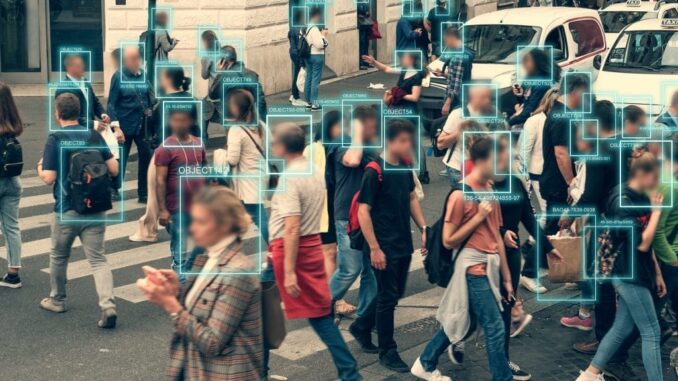
You access your phone, and immediately begin interacting with Instagram, accepting cookies, and agreeing to terms without having read them. And you just gave your consent – not to someone but to the whole system. It sees you, it anticipates you, and it modifies you.
It is commonly believed that surveillance can be seen as something spectacular and dramatic: it takes place through CCTV cameras, police observation, or dystopian futures. However, surveillance today seems to be less obvious and possibly more dangerous. It is embedded in our daily use of technology and made possible through artificial intelligence (AI), driven by data.
According to this thesis, AI surveillance is not a future threat; it exists now, and is implemented through processes of datafication and platform governance, which users fail to understand or give meaningful consent to.

The Invisible System: Datafication and Surveillance
To understand modern surveillance, it is essential to abandon the idea of simply monitoring human activity and focus instead on the datafication process. Datafication refers to the process of turning any human action into a form of measurable data which could be used for further analysis and predictions (Mayer-Schönberger & Cukier, 2013). Liking a post, watching a video, or pausing it – all of these are just examples of data that can be accumulated by algorithms and turned into behavioral profiles. With these data, AI is able to predict and suggest what users would like to see next.
The process of collecting behavioral data is inherent in modern social media platforms including Instagram, TikTok, and Google. Every time users spend more time on a video, they send a message to the algorithm and receive further suggestions based on their predicted interests. This creates a loop during which users’ choices become more and more predictable and predictable actions are presented as suggestions. While it might appear beneficial at first glance, there is one crucial factor here – social media platforms are no longer reacting to users’ actions, they are shaping them.
In her work on surveillance capitalism, Zuboff defines this process as the practice of exploiting people’s experiences for profit (2019). In other words, users are not the target audience – they are just materials which can be used for creating valuable products such as behavioral data and predictive algorithms which can then be sold to advertisers. In addition, while collecting behavioral data might sound bad enough, what is really disturbing is that it is constantly collected without offering any chances for opting out of it.
Thus, being active online automatically means becoming part of the process of surveillance. Many people are not even able to stop participating in the process since digital platforms are crucial in their work and social environment. Therefore, surveillance is now a reality of everyday lives rather than an external influence. Datafication turns routine actions into measurable behavioral data.

Case Study: Clearview AI and the End of Anonymity
When examining how the tangible nature of AI surveillance is illustrated in real life, we can focus on examples that demonstrate how data are collected and utilized. One of the most controversial cases over the past few years has involved a company called Clearview AI, which created software to identify people using facial recognition technology based on the analysis of pictures from the Internet. What distinguished it from other companies working with data is that Clearview AI does not ask anyone for consent to access their data and does not negotiate with platforms for permission to obtain images from them. It managed to accumulate more than three billion pictures of people on different social networks, for instance, Facebook and Instagram.
This data helped create an AI system that would analyze images and help identify people with extremely high precision. The police services of multiple countries used it to investigate criminal cases and search for suspects. This might seem like a useful thing until you remember one detail – people who became a part of the database were not aware of what happened, nor could they withdraw their pictures from there.
Here lies a crucial question – what does privacy mean in the age of digitalization? The general idea was that even though you can be observed by people in public spaces, nobody will record your appearance or track you after that. However, Clearview AI made it possible to connect a face from an image to a person’s identity almost immediately, along with linking it to their social accounts and personal data.
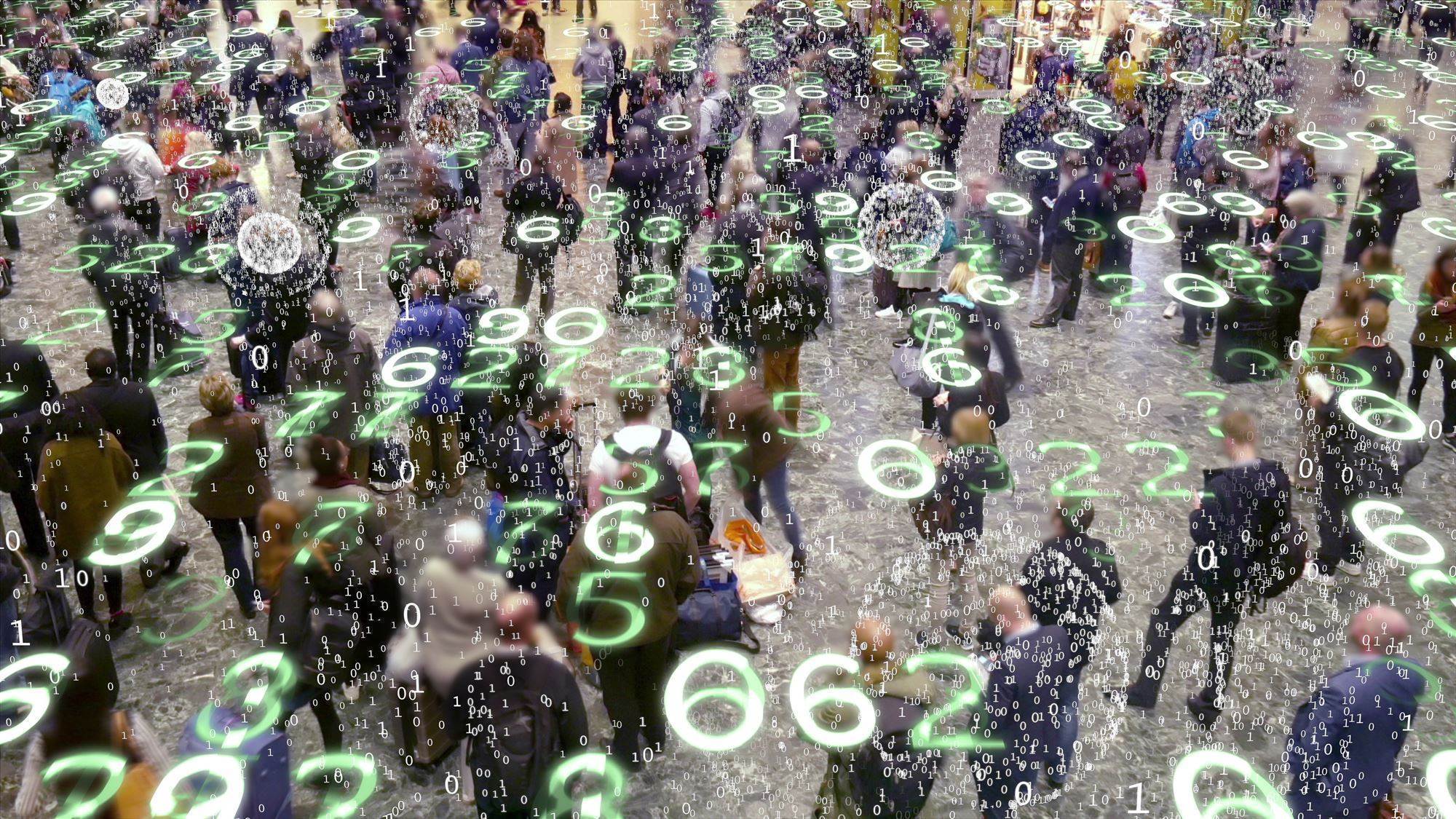
While this is happening, people do not know anything about such a project being launched in the background. As a result, some countries started prosecuting the company, and in many cases, they succeeded in proving that it violated people’s rights concerning their data protection. Nevertheless, despite legal disputes, it continues its development.
What does it mean to become a victim of such AI surveillance? You do not need to give anyone permission to use your data; however, you will lose control over it. Your picture, shared with the intention of socializing, will be turned into something that goes much further than just interacting with people. In conclusion, the case of Clearview AI reveals a general problem associated with the tangible nature of surveillance systems based on AI.
The Key Problem: Power, Control, and Consent as an Illusion
Early discussions of AI-based surveillance technology highlight its privacy implications. Further investigation reveals that power plays a critical part in the problem. It is the ability of large corporations and the state to collect, analyze, and act upon massive amounts of data which poses the main risk. There is no symmetry between those whose behavior is monitored by the system and the entity behind it since users cannot influence or understand the technology completely.
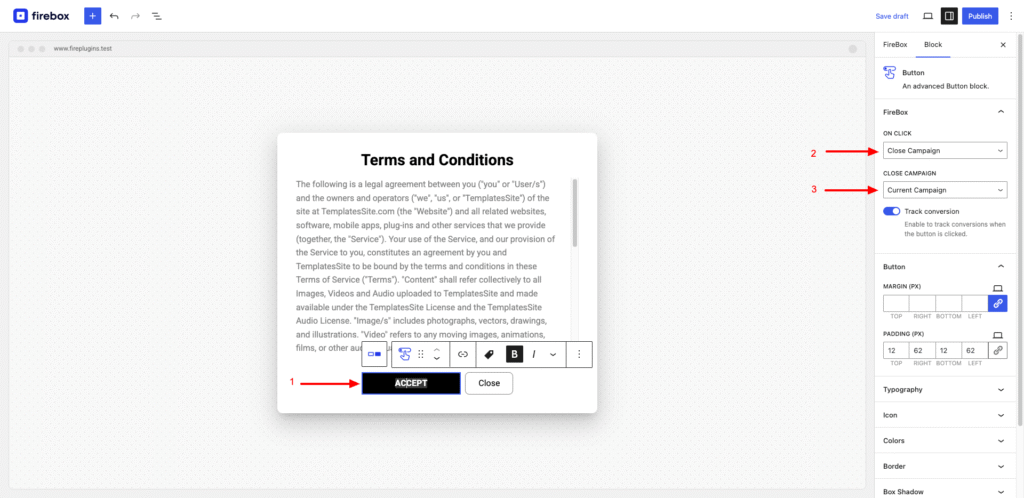
Here, too, comes the role of consent. Digital companies offer the option of agreeing to specific terms and conditions, like accepting cookies. The idea is to create an impression that the user has some control over their personal data. These terms and conditions tend to be lengthy and difficult to read while declining to accept them will prevent one from accessing the website. Thus, the users’ consent appears to be an illusion because it is forced rather than voluntary and fully informed.
As Pasquale(2015) suggests in his work, this process is characterized as the black box of algorithms. Users do not understand how decisions are made, based on the information collected by the platform, and are unable to react to such measures. Those controlling the system do not face accountability since people do not know what they can complain about.
Why People Fail To Take Privacy Seriously—and Why They Ought To
Despite rising awareness about data privacy problems, many people tend to interact with the digital world with no worries at all. The reason for this might include the ease and comfort these technologies offer. Personalized recommendations, ads, etc., create a feeling of benefit that makes users accept privacy risks as a tradeoff. For many people, the situation works well enough.
It is also common to believe that surveillance does not matter if one has nothing to hide. This point of view ignores wider consequences of data collection. Besides privacy infringement, surveillance implies an ability to control and manipulate people. When algorithms decide what people see online, they affect their beliefs and decisions as well.
According to Crawford (2021), AI is implemented in a social and political context, which means that its consequences affect not only individuals. Data reflects and amplifies existing differences and biases, which might lead to discrimination if implemented in automation practices. Hiring processes, policing, or other spheres of life might become unfair if biased algorithms make decision for us.
Normalization of data collection and surveillance makes it less likely for people to resist. When the process becomes common in digital environment, critical thinking disappears. It contributes to a self-reinforcing cycle of data collection, normalization, and tolerance towards this process.
Why Regulations Encounter Obstacles
The regulation of AI surveillance faces serious difficulties. In addition to rapid technological developments, there is usually a delay in creation of new rules and regulations. By the moment they get approved, innovative products emerge creating new gaps between technologies and legislation.
Another challenge includes global character of the problem. Digital enterprises often operate in many jurisdictions each having its own regulatory system. It creates opportunities to play with legal frameworks and use weaknesses of certain systems.
There is a risk for regulations to be ignored or poorly implemented due to lack of resources. Political will and interest are also important for successful implementation and enforcement of existing laws.
In addition to this, innovation vs. regulation conflict affects attempts to introduce new laws. Governments are often reluctant to apply too strict policies to valuable technologies.
The Quiet Trade We Didn’t Notice
What is perhaps the most dangerous quality about AI surveillance is not its obvious nature, but its insidious tendency toward disappearance. Privacy does not disappear suddenly; it slowly disappears as part of a system seen as necessary.
What makes this transition especially significant is that, for the most part, this change has occurred without significant opposition. Surveillance has been incorporated into people’s daily lives via means of convenience, design, and habituation. As such, people move around constantly surveilled, but not by force, but by their own choice.
It is not simply the next task to protect privacy more effectively; it requires an entirely new understanding of how users interact with the technological infrastructure. As long as data remains the primary substance of artificial intelligence applications, questions of power, consent, and control will always define the digital landscape.
We didn’t choose this; we live it.
That is precisely why resisting it proves difficult.
REFERENCES
- Zuboff, S. (2019). The age of surveillance capitalism. Profile Books.
- Mayer-Schönberger, V., & Cukier, K. (2013). Big data: A revolution that will transform how we live, work, and think. Houghton Mifflin Harcourt.
- Crawford, K. (2021). Atlas of AI. Yale University Press.
- Pasquale, F. (2015). The black box society. Harvard University Press.


Be the first to comment