
Have you ever simply opened an application and, without even thinking, clicked on I agree? The majority of us do this on a day-to-day basis. We accept the terms of privacy, warnings of cookies within seconds, and terms of service. These little things turn into a routine, and not many individuals ever actually consider what this is.
But such moments are significant. By clicking I agree, we are authorising digital platforms to gather, store and use our personal information. This information can consist of what we view, our location, people we communicate with and even the duration we peruse a video. It means that it is a free trade, to which we voluntarily offer the terms and conditions to get an entrance to the service.
This, however, begs a question. Do we even know what we are devoting ourselves to? But more to the point, can we do anything about it?
In the present digital era, user consent is currently a prominent aspect of the platform’s defence of its data practices. The system in place provides the platform with a way to enable the user to technically consent, yet users are hardly aware of its contents. This compromises their capability to make informed decisions. Thus, the mere click to consent is, in practice, by no means equivalent to real-life control.
What is meant by consent?
To see why the concept of consent is a problem in the digital environment, we have to first explain what consent is supposed to entail. Consent, as per the law and ethics, may be considered a well-informed and unambiguous decision. This implies that the consent has to be informed, and one has to be at liberty to accept or decline without coercion. Theoretically, this permission system is enabling. It implies that personal data can be managed by users and they can make their own decisions, according to their personal preferences. It, at the same time, implies that platforms also need to be open and indicate how the information will be collected and used.
But, in practice, online platforms are a long way from this ideal and the way they operate. The majority of privacy policies are long, complicated and have technical or legal jargon. To the average user, it is practically not possible to read and comprehensively understand these policies. This has seen the consent gradually turning into a formality and not a choice. There is a gap between theory and reality, and this indicates a more underlying problem. Users seem to be at liberty to make decisions; however, the digital system has a way of restricting them from making informed decisions due to the nature of these systems. Consent, in this sense, ceases being a power structure or a power tool and the way to allow the platforms to excuse themselves and put the onus on the user.
Why digital consent is broken?

Though the term consent is supposed to provide users with control, the manner in which it is structured on online platforms usually makes it difficult to effectively exercise such control. There are several factors that play into this issue, and when combined, devalue the importance of consent.
To begin with, the issue of the length and complexity of privacy policies is one of the problems. Such documents can be very long and in legal or technical terms. Although this information is accessible to the users (in principle), the majority of them have neither the time nor the expertise to go through and comprehend it comprehensively. This has brought about the fact that consent is mostly given without sufficient knowledge of the conditions.
Second, digital interfaces may also impact the decision of users due to their design. Many sites present information in small design details to make users consent to the gathering of information. As an example, the Accept All button is usually more prominent and has to be clicked, and declining or setting up preferences is more complicated. The design influences the user behaviour as it is most convenient to accept (Graßl et al., 2021).
Moreover, a lack of choice is still an issue. In most instances, the users are not able to use the service until they have accepted the terms. This means that consent can no longer be a free will exercise. Individuals using these platforms, particularly when they have now become a significant aspect of their daily life, may not even feel that they actually have any other option.
Combined, these aspects imply that the issue of consent in the online world is much more complicated than it seems. The users seem to have a choice, but the system is designed in such a manner that it is likely to make them agree. This poses an important question: Can the power of consent still be an effective power of users?
Data Collection and the Limits of Consent on TikTok

TikTok, one of the most popular social media platforms in the world, is reliant on the collection of data from its users. The question of digital consent is especially apparent. Most users are aware that the app records some rudimentary information, but are not aware that the capturing is elaborate and an ongoing process.
Every movement that the user makes in TikTok generates data. The platform tracks the number of videos viewed by the users, the length of viewing, re-viewing, pausing, liking or swiping videos. Recent studies revealed that TikTok collects valuable data such as facial features, geolocation, and behavioural patterns, with often no explicit and granular consent processes (Bello et al., 2025). Suzor (2019) maintains that such forms of data collection are institutionalised into privately dominated regimes, whereby platforms arbitrarily set the terms of how the behaviour of the users is monitored and analysed.
This information is then fed into to generate very detailed user profiles. These profiles are used by TikTok so that they can show what appears on the page of recommendations. This at first seems to assist. It appears as though the understanding of what users like on the platform is in-depth, and that the whole process can be personalised and engaged. Platform governance is becoming more of an interaction involving data, algorithms, and market incentives, as opposed to merely a response to user preferences (Flew, 2021, pp. 72–79).
But this is not simply about delivering content which the users enjoy. The recommendation algorithm of TikTok is created in such a way that it retains the user on the platform as long as possible. This means that this platform is not only behaviourally responsive on behalf of users, but also encourages certain behaviours. It displays greater bias towards the video that has a high probability of drawing attention, being emotive, or enticing the users to continue scrolling. In this case, the platform is not an impartial intermediary but a part of the process of generating user interaction, as Flew (2021) elaborates on the growing role of platform-based logics in structuring online experiences.
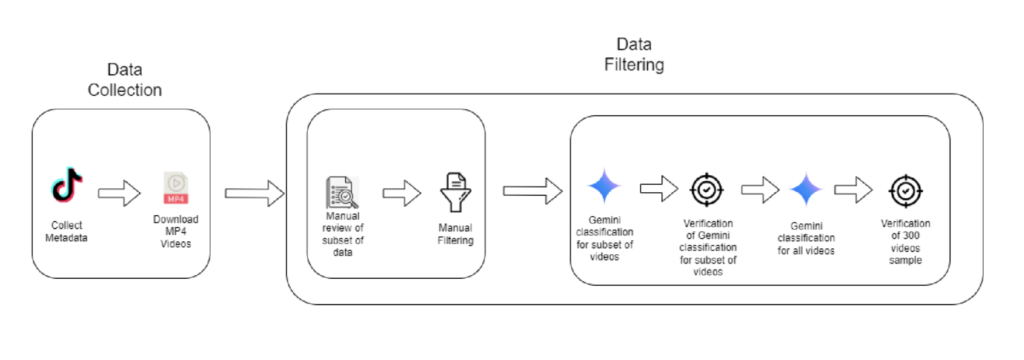
This has resulted in influencing and not observing the users. In the long run, it becomes used by the platform to personalise as well as to affect user behaviour and engagement (Nisan Çömezoğlu et al., 2024). An individual who has already watched a number of fitness videos may soon receive a flood of similar videos. A time-wasting user is also likely to begin experiencing even a narrower sense of perspective while watching political videotapes. In this scene, platforms are effective in regulating participation, the visibility and availability of information, and exercise a type of private power that is similar, but not as restrictive as, in the case of the traditional legal systems (Suzor, 2019, pp.10–24).
The problem is that most users who use TikTok are not aware of the amount of data that TikTok collects and the way the information is processed. When users click the “I agree” button, this will not mean that they have actually accepted this complex system. Although this consent is legally a sound one, it can hardly be considered informed consent. Online consent is thus deceitful as portrayed by TikTok. Although the users seem to be on a free choice, the platform hides the extent and outcome of such a choice. This leads to the formal presence of consent, but in reality, it is usually false; rather, it is best thought of as the construction of a governance structure of the platform.
Why this matters?
Digital consent, in its limitations, has a great impact on individuals and society. The aspects of these are not just about privacy, but also about power and control in the virtual world.
The fact is that the personal information control is one of the issues. When the user is not in a position to fully understand what they are consenting to, the user cannot then be a good custodian of how their information is collected and used. This further creates a habitual exchange of personal information without the complete understanding of the users. Commercialisation of data is another problem. The personal data has become an asset to be exploited to gain profit by the platforms, particularly in the case of specialised advertising. This system puts the users not only as consumers of the services but also as sources of monetizable data.

In addition, platforms and users do not have a balance of power. Big tech companies have the means and ability to come up with intricate systems, whereas common users usually do not have the tools to comprehend and navigate such systems. This imbalance renders it hard for users to oppose or transform these practices, even when they are not at ease with them.
The implication is that the issue of digital consent is not a technical or legal issue. It is also establishing power in the digital space and is influencing the user-platform dynamic.
Broader implications
Such issues have led to a lot of consideration of how digital systems are to be designed and managed. When it is no longer possible to rely on consent as the primary form of protection, then it might not be enough.
To overcome these difficulties, some states have come up with tougher data protection legislation to enhance transparency. However, even post-introduction of the GDPR, dozens of consent systems still have low legal standards and manipulative design policies are still prevalent on the internet (Nouwens et al., 2020). Should the underlying design of the platform further produce users passively agreeing, there may be no complete solution to the problem using legal frameworks.
How various societies may be tackling these issues is also important. Data control may be imposed in certain situations by direct regulation and censorship, and in other situations, it is implemented more subtly by consent mechanisms and platform design. Although these approaches appear to be dissimilar, both of them may to some extent restrict the autonomy of users.
This indicates that the issue of digital consent is not exclusive to one platform or nation, but is indicative of a wider change in the structuring of power and control in the digital era.

Conclusion
Consent has emerged as a major element of platform justification in the contemporary online world with regard to how they use their data. Nevertheless, consent, as demonstrated in the current post, is usually influenced by the design decisions, complicated information, and lack of options. A simple click is not necessarily an indication of actual knowledge or control.
We should reconsider what meaningful consent is in order to enable users to make informed choices. This entails a more transparent interface, clearer communication and increased transparency on the side of platforms. Essentially, consent cannot be made a mere tick of a button. The privacy of the digital age can be attained only when users are really aware of it and are involved in the process.
Meanwhile, this task cannot be put solely on the users. Avoiding engaging people in intricate digital systems alone does not acknowledge the tremendous influence platforms have in the decision-making process. The designers, companies and regulators have a role to play in designing the consent environment. Unless structural changes are undertaken, users will continue to use systems which they lack a full understanding of. This leaves a more profound question: in the existing platform model, is it even possible that users can have genuine control of the platform, and how will the digital rights be redefined in the future?
References
Bello, S., Noureddine, L., Bappah, B., & Ali-Gombe, A. (2025). The privacy cost of fun: A measurement study of user data exposure in tiktok mini-games. Computers & Security, 160, 104728. https://doi.org/10.1016/j.cose.2025.104728
Flew, T. (2021). Regulating Platforms (pp. 72–79). Polity Press.
Graßl, P., Schraffenberger, H., Zuiderveen Borgesius, F., & Buijzen, M. (2021). Dark and Bright Patterns in Cookie Consent Requests. Journal of Digital Social Research, 3(1), 1–38. https://doi.org/10.33621/jdsr.v3i1.54
Nisan Çömezoğlu, Berra Okudurlar, Duygu Barışkan, & Ecenaz Tellioğlu. (2024). Exploring and Analyzing the Data Practices of Tiktok. ResearchGate. https://doi.org/10.13140/RG.2.2.10779.07203
Nouwens, M., Liccardi, I., Veale, M., Karger, D., & Kagal, L. (2020). Dark Patterns after the GDPR: Scraping Consent Pop-ups and Demonstrating Their Influence. Proceedings of the 2020 CHI Conference on Human Factors in Computing Systems. https://doi.org/10.1145/3313831.3376321
Suzor, N. P. (2019). Lawless : the secret rules that govern our digital lives (pp. 10–24). Cambridge, United Kingdom ; New York, Ny Cambridge University Press.
Be the first to comment