In an era where nearly everyone is active on multiple social media platforms simultaneously, most of us have inevitably encountered hate speech online—sometimes in the form of a few hostile comments on a post, and other times as direct attacks on individuals. It’s easy to dismiss these moments as part of everyday online culture, viewing them as unpleasant but ultimately harmless. However, do things that happen online really stay online? We seem to have forgotten that there is no clear boundary between our digital and offline lives; experiences of online abuse can translate into real emotional distress, fear, and social consequences (Carlson & Frazer, 2018).
More importantly, hate speech is not merely about personal offense. It causes broader harm by reinforcing discrimination, normalizing hostility, and, in some cases, even fueling real-world violence (Sinpeng et al., 2021). In a digital environment where content spreads rapidly and reaches a wide audience, even seemingly insignificant or isolated remarks can accumulate into broader social risks. For this reason, hate speech is not merely a matter of personal sensitivity but a serious social issue that demands urgent attention.
What is ‘Hate Speech’?
“Speech that ‘expresses, encourages, stirs up, or incites hatred against a group of individuals distinguished by a particular feature or set of features such as race, ethnicity, gender, religion, nationalist, or sexual orientation’ (Parekh, 2012, p. 40)”
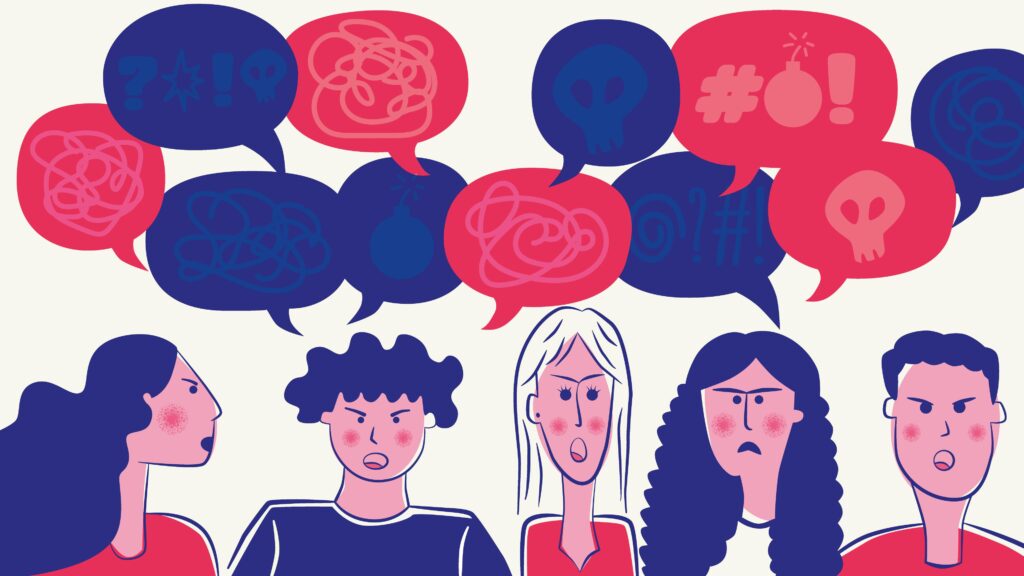
Most social media users have likely encountered hate speech in one form or another. Sometimes it takes the form of a few comments targeting a specific individual under a trending post; other times, it manifests as hostile one-on-one “attacks” directed directly at a person. In today’s online world, the causes of hate speech are countless, and most are utterly absurd… However, the harm it causes can generally be categorized into two forms: causal harm and constitutive harm.
Image Resource: AI Generated
Causal harm refers to the harm resulting directly from the expression of hate speech (Sinpeng, 2021). This includes the spread of discriminatory attitudes, the fostering of exclusion and hostility, and—if left unchecked over time—the potential for small incidents to escalate into violence targeting specific groups. In this sense, the significance of hate speech lies not only in its content but also in the chain reaction it may trigger. This is particularly critical in online environments, as a defining characteristic of platforms is the rapid dissemination of content; harmful speech can spread swiftly across the internet, reach vast audiences, and become normalized through repeated exposure (Sinpeng et al., 2021).
In contrast, the harmful nature of constitutive harm does not depend on subsequent events. The speech itself is harmful because it demeans, humiliates, oppresses, or labels a particular group as inferior. Its harmful nature involves “demeaning and persecuting members of the target group, classifying them as inferior, oppressing them, and legitimizing discrimination against them” (Sinpeng, 2021). For this reason, hate speech cannot be simply categorized as offensive language or an act of causing emotional distress; rather, it reveals discrimination and inequality within the context of discourse—depriving people of their dignity and equal status solely because they belong to marginalized groups (Sinpeng et al., 2021).
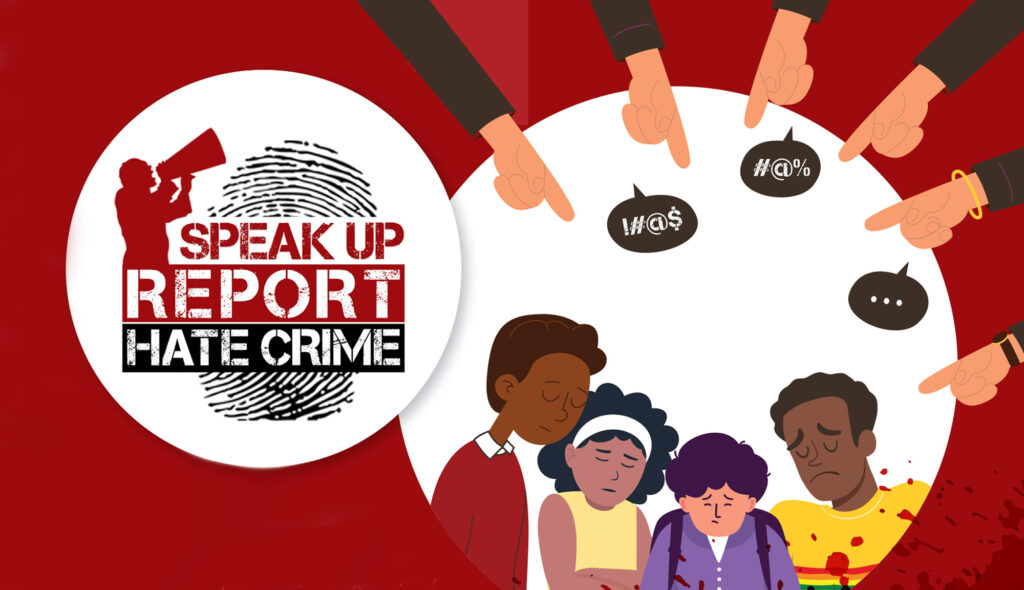
These two forms of harm often coexist. For example, Carlson and Fraser’s (2018) study on the online experiences of Indigenous Australians found that nearly all participants had witnessed anti-Indigenous racist speech on Facebook and Twitter; over one-third had personally experienced direct racial discrimination; 21% had received threats; and 17% reported that these experiences had impacted their offline lives. Racist abuse inflicts both intrinsic and causal harm. Intrinsically, it perpetuates the oppression of ethnic minorities; causally, it triggers real-world consequences—such as fear and distress—that extend beyond the screen (Carlson & Frazer, 2018).
Case 1: When Moderation Fails
“As of late 2019, Facebook’s machine learning classifiers monitored only 40 languages for hate speech content.” (Sinpeng et al., 2021)
“All page administrators said Facebook had failed to take down material that they had reported.” (Sinpeng et al., 2021)
Of course, major platforms have long been aware of the social harm caused by hate speech and have implemented a series of countermeasures. Taking Facebook as an example, its governance approach primarily includes establishing community standards, using algorithms to automatically identify content, deploying manual review teams, and managing content through user reporting mechanisms (Sinpeng et al., 2021). However, the results have been largely unimpressive.
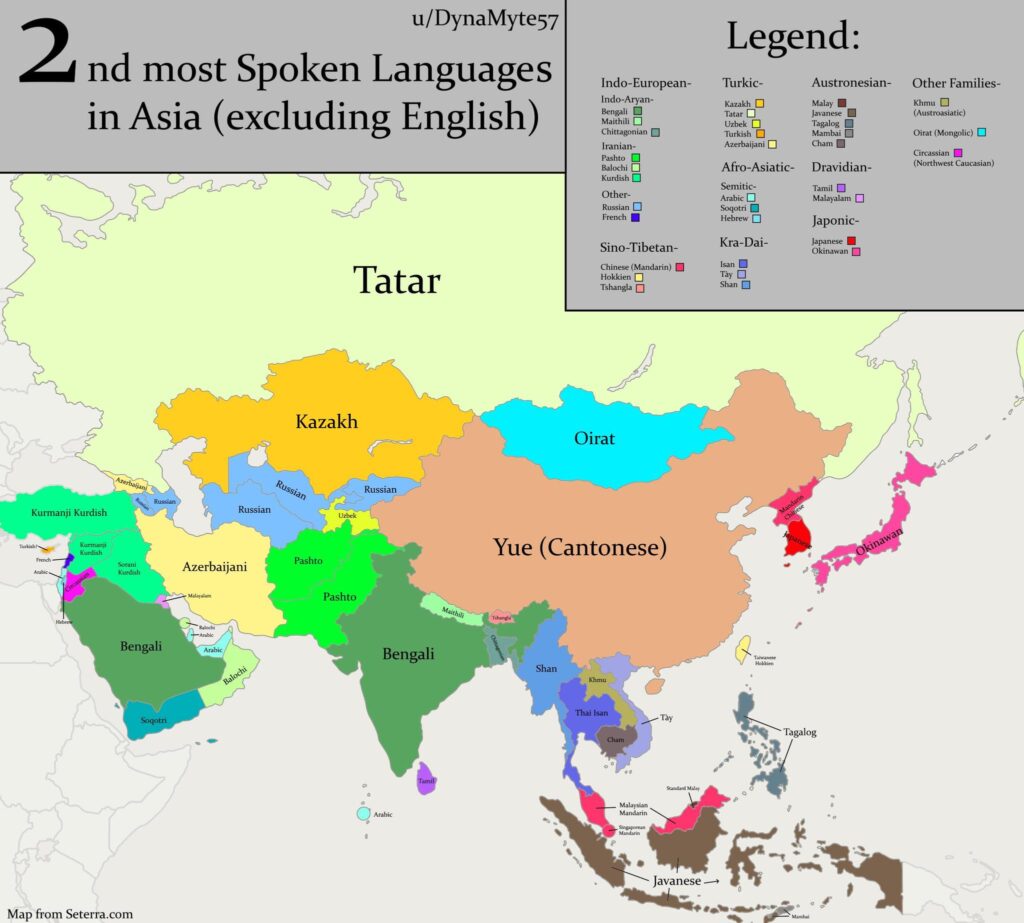
First, linguistic and cultural differences make it difficult to accurately identify hate speech. Unique languages used in some Southeast Asian countries cannot be precisely translated during the moderation process. Hate speech often relies on local context, metaphors, and cultural backgrounds, and platforms’ global moderation systems struggle to effectively understand these nuances (Sinpeng et al., 2021). Second, there is a regulatory vacuum. In the Asia-Pacific region, most countries lack specific hate speech legislation, and existing laws are often used to suppress political dissent rather than protect minority groups, leaving platforms without external oversight (Sinpeng et al., 2021). Regarding manual moderation, the marginalization of moderators and a lack of expertise are also significant factors. Page moderators, who serve as the frontline of content governance, are mostly untrained volunteers. For example, in Myanmar, Indonesia, and the Philippines, many LGBTQ+ community moderators are unfamiliar with platform rules and must rely on experience to address hate speech. Since there are no universal standards for enforcement, they often feel overwhelmed and powerless (Sinpeng et al., 2021).
These issues ultimately lead to “reporting fatigue”—users lose the motivation to report violations due to slow or ineffective responses from platforms. This is not only a failure of the management mechanism but, over the long term, will also result in users losing trust in the platform and developing concerns about the safety of their online lives.
Case 2: Hate Speech Beyond the West
“These stories strengthen the identity of the group and show that other groups are threats to their culture, politics, or economy. This dynamic is apparent in discourse directed at LGBTQ+ communities, rural migrant workers, foreigners, and particular national groups, with each discourse illustrating distinct aspects of perceived threats and social tensions.”
(Guan & Chen, 2025)
When we look to the East, we see that hate speech is not just a problem in Western societies; it is a worldwide problem that shows up in different ways depending on the social and political situation in each place.
Image Resource: AI generated
In contrast, Chinese hate speech focuses on East-West differences and nationality, not race. This difference is more about identity, belonging, and perceived threats than personal bias. Guan and Chen (2025) note that online hostility often involves narratives that define “us” and “them.” Such stories reinforce in-group identity and portray out-groups as cultural, political, or economic threats.
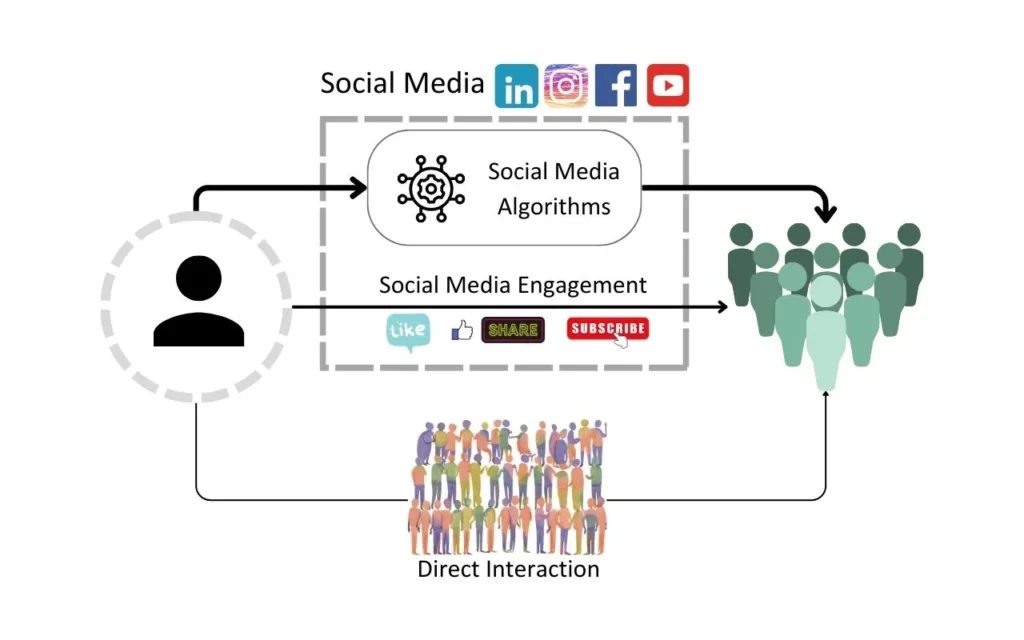
Digital hate speech fuels these tensions. Content that escalates conflict often resonates in platform systems designed to maximise user engagement. An algorithm rewards and normalises divisive narratives, creating a feedback loop. Hate speech is socially embedded and shaped by local contexts and platform structures.
Furthermore, these patterns are not random. They reflect China’s unique historical and social context, where rapid economic transformation, cultural change, and a strong emphasis on collective identity are intensifying anxieties about difference and social hierarchy. The state also promotes a more unified national ideology, making behaviour that deviates from mainstream norms more likely to be seen as a threat or undesirable. Hate speech reinforces group membership in this environment.
Platforms Aren’t Just “Neutral Spaces”
It would be difficult to argue that platforms are merely neutral spaces where individuals are free to express their opinions at this point in time. There is simply an excessive amount of hate speech, and the damage that it causes is significant. In spite of the fact that substantial corporations such as Facebook frequently portray themselves as champions of human rights and complete neutrality, the reality is significantly more complicated. The manner in which platforms are designed plays a significant role in determining which particular content is pushed, which content is recommended, and which content is overlooked. This plays a crucial role in shaping the content that we truly see on the internet. According to Woods and Perrin (2022), these design choices are not made by chance; rather, they have an effect on the manner in which individuals behave and interact by using these platforms.
The fact that hate speech does not appear at random but is frequently amplified makes this an extremely important point. In general, content that is emotionally charged, controversial, or extreme tends to attract more attention, more comments, and more shares, and it also, of course, generates more profit for the stakeholders who are operating behind the scenes. Because the design of the platform is centred on user engagement, content like this is more easily disseminated. To put it another way, profit-driven systems may, in the end, offer incentives for the very behaviours that they are designed to discourage.
Numerous researchers are of the opinion that platforms ought to take on a greater level of responsibility. It would be inappropriate for them to simply react after damage has already been done; rather, they should think about how their systems might be contributing to the conditions that lead to damage from the beginning. According to Woods and Perrin (2022), this idea is frequently referred to as the “duty of care,” which indicates that platforms have a responsibility to make their spaces safer, it is not enough for them to simply make them more active. As an alternative, to paraphrase a well-known proverb, “when the scales are tipped, neutrality is complicity.”
Free Speech, But Not Without Limits
“We are creating a world where anyone, anywhere may express his or her beliefs, no matter how singular, without fear of being coerced into silence or conformity.”
One of the original intentions behind the platform’s creation was to provide a space where people could freely express themselves and build connections. For decades, the notion that “the internet is a space for unrestricted expression” has had a profound influence. However, when freedom of speech becomes an enabler of hate speech, we must pause in our pursuit of absolute freedom and ask ourselves whether we can truly put this theory of a “realm of freedom” into practice. This ideal has always been in tension with another fundamental principle: the protection of human rights.
Platform governance is not intended to censor opinions, but rather to set boundaries so that everyone can participate meaningfully. Users should still be able to express their views, debate ideas, and find communities online. But this does not mean that platforms should provide sanctuary for behavior intended to harm others. From a human rights perspective, creating safer digital spaces is not a restriction on freedom, but a prerequisite for it.
From a human rights perspective, freedom of speech is not absolute, especially when it severely infringes upon or threatens the rights of others. When hate speech incites discrimination and targets specific ethnic, racial, or religious groups, can this still be considered mere “freedom”?
The Universal Declaration of Human Rights (UDHR) recognizes the right to freedom of expression in Article 19, but also emphasizes that rights and responsibilities go hand in hand. More explicitly, the International Covenant on Civil and Political Rights (ICCPR) states that the exercise of freedom of expression “carries with it special duties and responsibilities” and may therefore be subject to certain restrictions, particularly when necessary to respect the rights and reputations of others or to maintain public order (ICCPR, Article 19, Paragraph 3).
A key point: hate speech is not merely protected speech that happens to be offensive. When it undermines the dignity, safety, and equality of others, it directly conflicts with their human rights. In this sense, the issue is not a choice between freedom and restriction, but rather a matter of balancing conflicting rights. Hate speech often exacerbates existing inequalities and further marginalizes already vulnerable groups. Allowing such speech to circulate without restriction does not create a neutral or “free” environment; rather, it may suppress those most deeply affected.
Today, with platform governance and regulation still under development, this dilemma between freedom and restriction cannot yet be fully resolved. However, every individual should strive to follow the light of goodness within human nature; anyone who respects others and upholds human rights will lean toward harmony and stability in this dilemma, even if it means sacrificing a small portion of their freedom.
Carlson, B., & Frazer, R. (2018). Social media mob: Being Indigenous online. Macquarie University.
Guan, T., & Chen, X. (2025). Threat perception, otherness and hate speech in China’s cyberspace. Journal of Contemporary China, 35(158), 1337–1352.
Parekh, B. (2012). Is there a case for banning hate speech? In M. Herz & P. Molnar (Eds.), The content and context of hate speech (pp. 37–56). Cambridge University Press.
Sinpeng, A., Martin, F., Gelber, K., & Shields, K. (2021). Facebook: Regulating hate speech in the Asia Pacific. University of Sydney & University of Queensland.
United Nations. (1948). Universal Declaration of Human Rights.
United Nations. (1966). International Covenant on Civil and Political Rights.
Woods, L., & Perrin, W. (2022). Obligating platforms to accept a duty of care. In M. Moore & D. Tambini (Eds.), Regulating big tech: Policy responses to digital dominance (pp. 93–109). Oxford University Press.


Be the first to comment