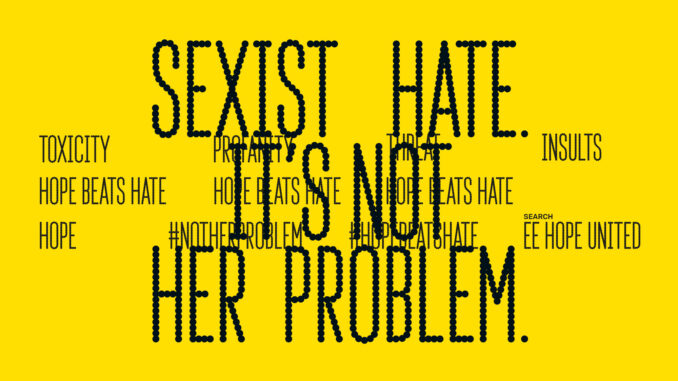
Have you ever noticed how the most extreme voices online always seem to get the most attention?
If you spend just a few minutes scrolling through social media, you quickly notice a pattern: the loudest voices are often the most controversial. This is especially clear when it comes to sexism. Misogynistic influencers gain millions of views, harassment spreads rapidly, and anti-feminist narratives seem to thrive.
At first glance, it’s easy to just blame “toxic users”: well, that’s just because some people are sexist.
However, that explanation is too simple. I argue that sexist hate speech isn’t only created by individuals – it is systematically amplified by platform algorithms, design, and business models. Recent research shows that these systems don’t just reflect misogyny – they actively help structure and expand it.
Algorithms Don’t Just Suggest Content – They Make It Worse
Let’s start with the algorithm – the invisible system deciding what you see.
Social media platforms like YouTube and TikTok use algorithms that are built to keep people engaged as much as possible. But here’s the catch: because of the engagement-driven systems, content that sparks strong emotions – especially anger or outrage – tends to perform best. And sexist content often does exactly that.
A 2024 systematic review found that online misogyny has become “more aggressive” in digital spaces than expected today (Fontanella, 2024). This suggests that something about the online environment makes harmful behaviour stronger.
What’s even more striking is that real-world experiments show you don’t need to search for misogyny to run into it. A 2024 investigation found that brand new accounts on Facebook and Instagram were gradually pushed toward sexist content – even when the users had not shown any interest in it before (The Guardian). In other words, you don’t even have to go looking for it – it can find you.
As Tarleton Gillespie argues, platforms do not simply host content – they “organize it, make it visible, and structure how it is encountered” (Gillespie, 2018). In other words, what we see online is not neutral, but carefully curated.
This reveals a key problem:
Algorithms don’t just reflect user interest – they can actively introduce and amplify harmful content.
Case Study 1: The “Platformization” of Misogyny
To understand this more deeply, recent scholarship introduces the idea of “platformization of misogyny.” Research by Sara Liao shows that platforms don’t just host misogyny – they actually create it through their structure. She argues that misogyny is shaped through “design, features, and algorithmic shaping of sociality” (Liao, 2023).
In her case study of Chinese social media, a gender controversy involving a female standup comedian Yang Li quickly escalated into widespread misogynistic attacks – not simply because of users, but because the platform’s systems amplified outrage and visibility.

This idea is powerful:
Misogyny online is not random – it is built into how platforms organise our attention.
Case Study 2: The Rise of the “Manosphere”
Ever heard of the “manosphere”?
To understand how sexist hate speech spreads, we need to look at the “manosphere”. It’s a loose network of online communities and influencers that promote anti-feminist or openly misogynistic ideas. And it’s grown massively on platforms like YouTube and TikTok. Influencers produce content that frames women as manipulative, inferior, or responsible for men’s problems.
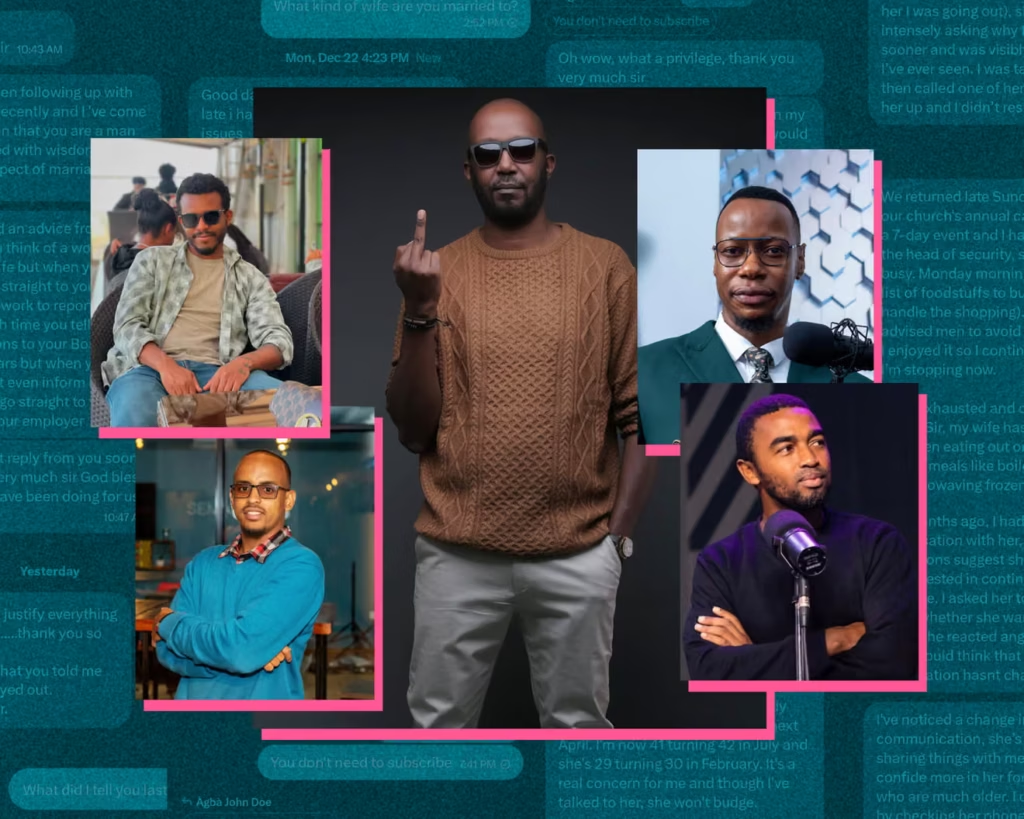
Recent reporting shows that this trend is not limited to Western countries. In Africa, for example, misogynistic influencers have built large audiences online, spreading messages that normalise male dominance and hostility toward women. (The Guardian)
Studies have shown that users can start with something totally harmless – like dating advice or self-improvement – and slowly get recommended more extreme content. One video leads to another, then another… and before long, the tone shifts.
This is sometimes called a “rabbit hole” effect.
Scholar Safiya Umoja Noble argues that algorithms often reinforce existing biases rather than challenge them (Noble, 2018). So if a platform detects even slight interest in gender related content, it may keep feeding more of it – often in more extreme forms.
And because controversial content gets more engagement, it gets pushed even further.
The Rise of Misogyny Influencers
Recent research also highlights how misogynistic content creators are growing more influential.
A 2025 study on “misogyny influencers” shows how online figures actively shape young men’s identities and attitudes toward gender (Milne, et al, 2024). Another 2025 paper describes a “post-digital” environment where these influencers thrive through algorithmic visibility and viral engagement (Haslop & Ringrose, 2025).
These influencers succeed because their content provokes strong emotional reactions, encourages debate and conflict, and is very easy to share. As a result, platforms reward them by giving them more reach. In other words, Sexist content fits perfectly into this system. It sparks arguments. People jump into the comments to agree, disagree, or fight. And all of that activity tells the algorithm: this is interesting—show it to more people. So even if most people disagree with a misogynistic video, their engagement can actually help it spread. That’s the paradox – The more people react, the more the content grows.
This aligns with broader research showing that misogyny spreads through networked communities rather than isolated individuals.
From Exposure to Normalisation
The danger is not just people see this content – it’s normalisation.
A 2025 study on misinformation about women found that sexism and platform dynamics interact to shape people’s beliefs, influencing how audiences perceive female public figures (Ahmed, Masood & Ting, 2025). At the same time, network analysis research shows that digital sexual harassment spreads across platforms as an interconnected system, amplifying gender-based violence through online networks (Basit, Santoso & Rizky, 2025).
This suggests that misogyny online is not just visible – it becomes embedded in everyday digital culture.
Why Moderation Still Falls Short
At this point, you might be thinking: why don’t platforms just remove this content?
It’s not that simple.
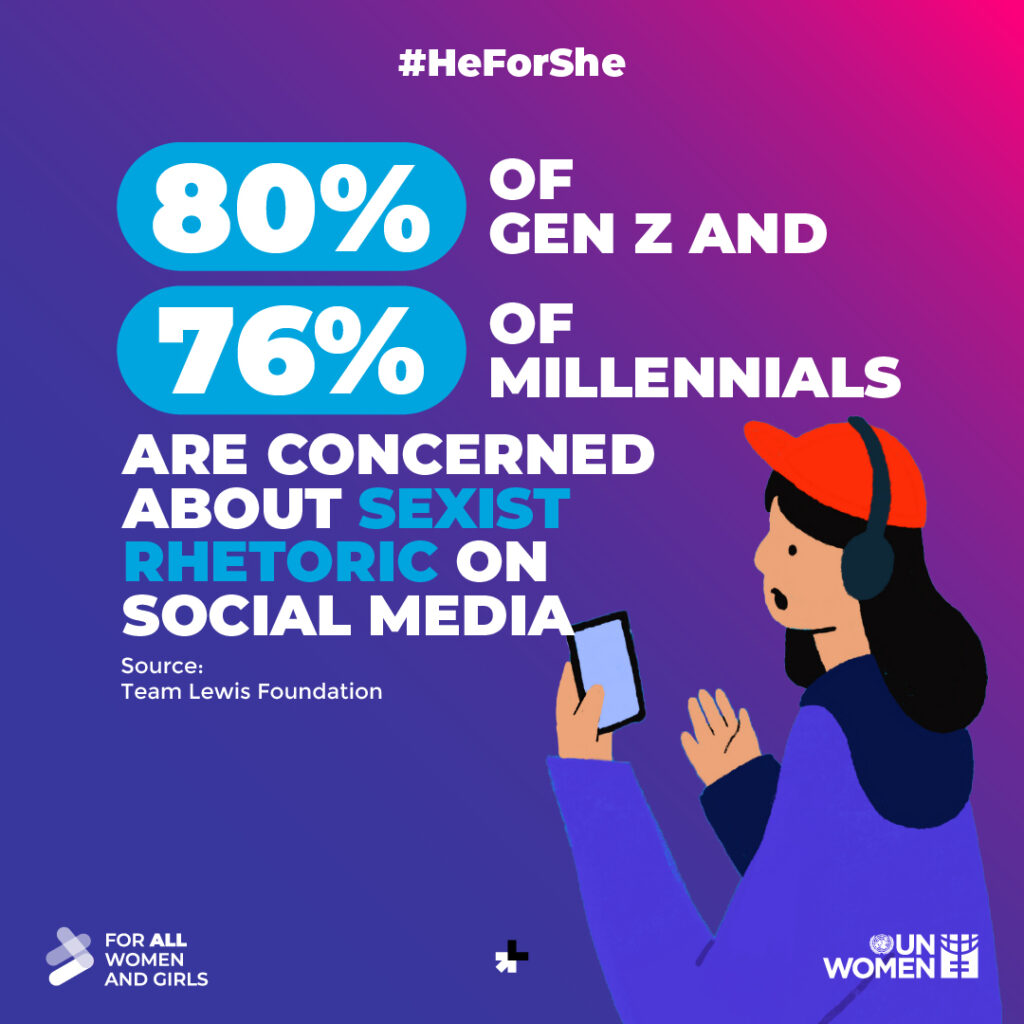
First, sexism online isn’t always obvious, misogyny is often subtle. It’s often disguised as “Jokes”, Sarcasm, Stereotypes, etc. These are much harder for AI systems to detect. Research from 2023 to 2024 highlights how hard it is to detect “implicit” sexism, noting that traditional moderation tools often fail to recognise abuse that depends on context or cultural details.
For example, researchers argue that generic toxicity systems are “inadequate” for identifying misogyny, because they miss meanings that depend on specific situations and cultural differences (Snoswell, A. J., et al, 2023).
Second, there’s just too much content. Platforms are dealing with millions (or billions) of posts every day.
And third- this is the tricky part – controversial content is often good for business.
These explain why harmful content stays online, why users keep experiencing harassment, and why moderation often seems inconsistent.
The Attention Economy Problem
At the heart of all this is the platform business model.
Social media operates in what scholars call the attention economy, where success is measured by clicks, views, and engagement. As scholar José van Dijck explains, social media platforms are built around “connectivity engineered for profit” (Van Dijck, 2013). In other words, the goal isn’t necessarily to create a healthy conversation – it’s to keep people online. And nothing keeps people online like conflict.
Recent research shows that misogyny thrives in this system because it generates strong reactions. Emotional and controversial content keeps users on the platform longer – and therefore becomes more valuable.
In fact, newer studies suggest that even positive representations of women are reshaped by platforms into commercialised and algorithm-friendly forms, showing how deeply platform logic influences the way we talk about gender (Xu, 2025).
Real-World Consequences
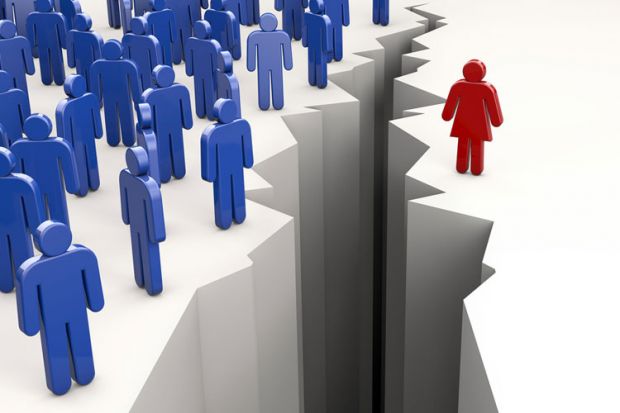
It’s easy to dismiss online sexism as “just the internet.” But its effects are very real.
Recent reporting highlights how misogynistic online communities are expanding globally, contributing to harassment, doxxing, and even offline violence in the real world (The Guardian).
Scholar Emma A. Jane describes online misogyny as a “relentless” form of abuse – and that’s exactly how it feels for many people on the receiving end (Jane, 2017).
There’s also a broader impact. When sexist ideas are constantly visible – and often rewarded – they can start to feel normal, especially to younger users.
In addition, for individuals, this can lead to mental health stress, withdrawal from public participation, and less visibility for women’s voices. For society, it makes broader gender inequality even stronger.
So, Why Do Platforms Amplify Sexist Hate Speech?
Looking across recent research and real-world cases, the answer becomes clear. Social media platforms amplify sexist hate speech because:
– Algorithms prioritise engagement and emotional intensity
– Platform design enables rapid and networked spread
– Influencer economies reward controversial voices
– Moderation systems cannot fully capture subtle misogyny
– Business models depend on attention, not ethics
Importantly, this is not always intentional – but it is built into system.
Final Thoughts
Sexist hate speech online is not just a user problem—it is a platform problem. As newer research shows, misogyny is increasingly shaped by platform structures, algorithms, and economies of attention. Once we understand this, the question changes. Instead of asking, “Why are users so toxic?”, we should ask: what kind of digital system makes misogyny more visible, more profitable, and more normal? Until that system changes, sexist hate speech will not just exist online—it will continue to be amplified.
Reference List
Ahmed, S., Masood, M., & Ting, A. B. W. (2025). Social media, sexism, and misinformation about women politicians. Journalism & Mass Communication Quarterly. Advance online publication. https://journals.sagepub.com/doi/10.1177/10776990251313756
Basit, L., Santoso, P., & Rizky, F. (2025). Digital sexual harassment networks and amplification. Social Network Analysis and Mining. https://link.springer.com/article/10.1007/s13278-025-01563-3
Fontanella, L., Chulvi, B., Ignazzi, E., Sarra, A., & Tontodimamma, A. (2024). How do we study misogyny in the digital age? A systematic literature review using a computational linguistic approach. Humanities and Social Sciences Communications, 11, Article 478. https://doi.org/10.1057/s41599-024-02978-7
Gillespie, T. (2018). Custodians of the internet: Platforms, content moderation, and the hidden decisions that shape social media. Yale University Press. https://doi.org/10.12987/9780300235029
Haslop, C., & Ringrose, J. (2025). Post-Tate, post-truth, post-digital: Researching and mitigating misogyny influencers. Journal of Gender Studies. Advance online publication. https://doi.org/10.1080/09540253.2025.2568408
Jane, E. A. (2017). Misogyny online: A short (and brutal) history. SAGE Publications. https://sk.sagepub.com/book/mono/misogyny-online/toc#_
Liao, S. (2023). The platformization of misogyny: Popular media, gender politics, and misogyny in China’s state-market nexus. Media, Culture & Society, 46(1), 191–203. https://doi.org/10.1177/01634437221146905
Noble, S. U. (2018). Algorithms of oppression: How search engines reinforce racism. NYU Press. https://www.jstor.org/stable/j.ctt1pwt9w5
Van Dijck, J. (2013). The culture of connectivity: A critical history of social media. Oxford University Press. https://www.researchgate.net/publication/298428277_Jose_van_Dijck_Culture_of_Connectivity_A_Critical_History_of_Social_Media_Oxford_Oxford_University_Press_2013
Snoswell, A. J., et al. (2023). Measuring misogyny in online communities. https://arxiv.org/abs/2312.03330
Xu, J. (2025). Algorithmic culture and gender representation. https://chr.ewapub.com/article/view/26143
The Guardian. (2024–2026). Reports on social media algorithms and misogyny.



Be the first to comment