You tell a friend that you may need to get a new jacket. It is merely an incidental remark- nothing material, something that you would not term as data. But ten minutes later, you pick up your phone, go through a brief video application, and suddenly, your feed is awash with advertisements of clothing brands.
By this time, it is not even surprising. A bit out of the ordinary.
Most laugh and scream, it is like my phone is listening to me. Others are a little uncomfortable, and they pass over soon. Nevertheless, such a moment shows more than just a mere coincidence. They demonstrate the extent to which our daily existence is intertwined with digital mechanisms.
The line between individual privacy and big data is getting more vague in the modern internet-driven world. This blog is about the disappearance of privacy is not merely vanishing. Rather, it is being redefined by structures that transform our daily behaviours into data. Due to that, two things must be done simultaneously: to be more conscious about our personal data usage and to think more realistically and balanced about big data.
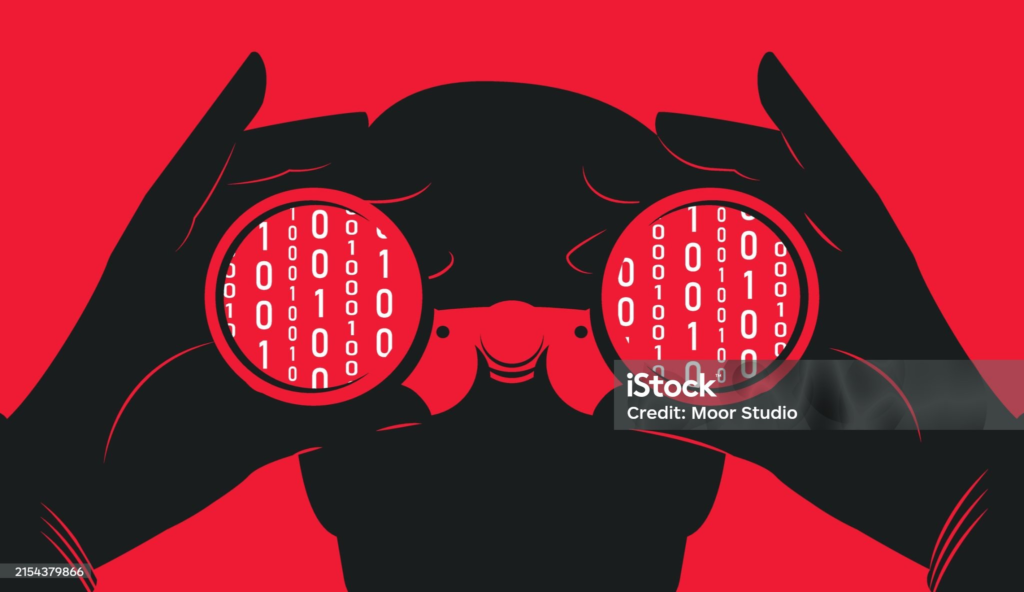
It Feels Like Listening—But It’s Actually Prediction
The initial thought that comes to mind when individuals encounter extremely relevant advertisements is: my phone is listening. In most instances, this is not the case.
Internet platforms do not have to listen to your conversations. They instead use something more potent, which is prediction via data (Suzor, 2019). Each move you make on the Internet is recorded. This involves what you search, what you click, the duration of time you spend watching a video, and even what you do not pay attention to.
Such minor bits of information might not appear significant in themselves. However, together they form an in-depth portrait of your interests and habits. With time, platforms will learn this information to tell you what you might want next.
As an illustration, in case you have recently viewed fashion material, hovered on clothing videos, or searched for seasonal items, the system is capable of making a reasonable assumption that you might want to purchase clothes. As the advertisement is displayed, it seems that the system has read your mind.
That is the reason it is an unpleasant experience. It is not the fact that your privacy has been directly infringed, but rather a prediction has become so accurate that it has become personal (Suzor, 2019). This is where private life and information begin to blur.
Privacy Is Not About Hiding—It’s About Control
One such notion is that privacy does not count unless you happen to have a secret. This is, however, a misconception.
Privacy does not primarily concern secrecy. It concerns the ability to manage your personal data, to determine who gathers it and how it is exploited and to decide how it is used and what choices are taken. This control is particularly significant in digital spaces since information just does not remain where it is distributed. After data is gathered, it can be stored, analysed, joined with other data and be used in a manner that the user might not anticipate. By illustration, an act as simple as online shopping of clothes may subsequently affect the advertisements, the suggestions, and even the platforms classifying your preferences.
Suzor (2019) asserts that digital platforms are systems of governance. They determine the regulations of people interaction, the information that can be seen, and data collection and utilization. Nevertheless, users do not understand these rules frequently. The majority of the population does not comprehend the methods of processing and sharing their data completely, in part because they are very technical, and in part because they are not made easy to understand by the platforms.
Despite the privacy settings and terms of service offered by platforms, these tools do not usually provide the actual control to the user. Their systems are complicated and the users are normally obliged to accept the terms in case they would wish to proceed with using the service. In most scenarios, such declines result in the inability to access the platform at all, which is not a viable choice of most individuals in a highly interconnected society.
This makes the power imbalanced. It might make users believe that they are choosing something, but the reality is that they have a number of choices. In this regard, privacy is not only a personal matter, but the extent to which platforms control the data and online lives of the users (Suzor, 2019). This definition of privacy aids in changing the emphasis on individual behaviour to the larger systems that influence the usage of data.

Privacy Looks Different on WeChat
Privacy is not understood in the same way everywhere. This becomes clear when we look at platforms like WeChat.
Chen and Cheung (2018) found that many WeChat users focus more on social privacy than data privacy. Instead of worrying about how companies collect their data, they are more concerned with how they appear to others online. For example, they think about:
- Who can see their posts
- How they present themselves
- How to avoid awkward social situations
Privacy in this context has to do with relationship management and not data protection.
This does not however imply that data privacy is not important. WeChat gathers a great deal of user data, and is utilized in numerous daily tasks, such as messaging, payments, and work. It implies that users are producing data all the time, and they might not be fully aware of it (Chen and Cheung, 2018).
Many users have no easy time quitting WeChat because WeChat plays an important role in their lives. This has resulted in a scenario where individuals have a sense of social control, and yet they lack control over data collection and utilization.
Weibo Shows That Privacy Is Being Redefined
The same scenario is evident in Sina Weibo. A study by Yuan, Feng and Danowski (2013) reveals that privacy on Weibo is largely interpreted as visibility and exposure by the users, not data protection.
As an illustration, users might be concerned with who views their post or the extent to which their posts are shared. These are issues of dealing with the attention of the people rather than those of collecting and analysing data using platforms. In very social contexts such as Weibo where information has a tendency to reach large numbers of users quickly, users tend to be more concerned with not being embarrassed or unwanted than they are with an abstract problem of data.
This indicates that privacy is not a concrete phenomenon. It transforms with the way in which individuals employ technology and what they are concerned with in their lives. Privacy on such sites as Weibo becomes strictly linked to reputation, identity, and social interaction, and not with technical control of data.
Nevertheless, this change may render certain risks less apparent. In the situation when users consider primarily social interactions, they might not pay as much attention to the way their data is collected and used under the hood (Yuan et al. , 2013). Consequently, critical issues on data storage, algorithmic analysis, and access by third parties might not be given due care.
That is, privacy is not fading away, it is being transformed in a more subtle way. This complicates the ability of the user to complete comprehend the long-term consequences of their online behaviors.
Why Not To Worry About It?
It is not that all people are not comfortable with data collection. There are those who even enjoy personalised content as it makes it easier to browse online.
According to Sayre and Dahling (2016), individuals respond to surveillance in varying ways, based on their personality. There are those who are more privacy-conscious and those who are less privacy conscious. As an illustration, efficient and convenient users can find targeted ads useful, and those who appreciate autonomy and control can find them annoying.
It is a significant difference. Provided data collection is not seen as a problem by many users, there is a lesser incentive to change practices by platforms. When business models are based on engagement and user satisfaction, user attitudes can directly affect how companies design their systems.
In the long run, it may be normal to track data continuously. As the individuals get accustomed to the personalised suggestions and content tailored to them, they might become unaware of the machinery. Such a slow introduction can make surveillance seem like an inseparable part of online living.
Once normal, people cease to question. This is the way surveillance systems can expand without a significant opposition (Sayre & Dahling, 2016). These systems are deeply rooted, and once in place, it is extremely difficult to refute or modify them.
This does not imply that people are not wrong to have convenience. Still, it does not imply that the degree of power platforms can be affected by individual attitudes. Being aware of this impact is a significant move towards becoming more critical about the way we use digital technologies.
The Comfort of It is the Price.
People accept data collection because it is working.
Big data is used to make services quicker and customized. It assists in suggesting videos, products and content that suits your interests. This, in most instances, enhances the user experience.
Nonetheless, this convenience is not an impartial one. Platforms are created to assist users, but to retain them and make them profitable (Suzor, 2019). In this process, data is important.
As an illustration, when a platform realizes that you spend more time on viewing specific kinds of videos, it will present to you more of such videos. This can generate a feedback loop making your preferences reinforced with time.
This means that platforms do not merely react to your behaviour but determine it. This poses significant issues of choice and autonomy. Is it by what you see you choose or by the system you are directed?

The Real Issue: The Line Is Blurry.
It is not merely a matter of collecting data. It is that we no longer have a clear idea of where privacy commences and data commence.
The vast majority of users are unaware of the specifics of information gathered, its usage and who can access that information. Such transparency is deficient and thus making informed decisions is hard.
That is why such experiences as the jacket ad are uncomfortable. They imply that there is something in your personal life that has been introduced in a system that you do not comprehend.
Although it may be a system operating on prediction, not actual surveillance, the same effect can be experienced: you no longer feel like your personal world is wholly yours.
This emotion is indicative of an even greater problem, which is the loss of clarity and control in the online world (Suzor, 2019).
What Can We Do?
It is easy to feel powerless when thinking about those issues. But there are still some ways to respond.
First, individuals can become more aware of how data works. This includes thinking more carefully about what information we share and how platforms use it.
Second, it is important to avoid extreme reactions. Big data is not entirely negative. It provides real benefits and is a key part of modern technology.
The goal is not to reject big data, but to understand it and question it.
Finally, privacy is not just an individual responsibility. As Suzor (2019) argues, it is shaped by larger systems, including platform design and regulation. This means that protecting privacy also requires broader discussions about policy, transparency, and accountability.
Conclusion: Privacy Is Changing, Not Disappearing
It is not an accident that people think their phones know too much. It is an indication of an altered state of being that has changed the way systems work.
The definition of the word ‘privacy’ has changed, and is not defined by an absence of data or technology, but an absence of social processes.
The shift is not an absence of data or technology, but a social closure.
It is not a matter of hiding information. The consideration people need to ponder is the ownership of control and processes of data and technology.
References
BRO Vector. (2020, December 10). People taking documents from shelves [Stock illustration]. iStock. https://www.istockphoto.com/vector/people-taking-documents-from-shelves-gm1290482722-385869836
Chen, Z. T., & Cheung, M. (2018). Privacy perception and protection on Chinese social media: A case study of WeChat. Ethics and Information Technology, 20(4), 279–289. https://doi.org/10.1007/s10676-018-9480-6
Moor Studio. (2022, December 19). Businessman and giant eyes around illustration [Stock illustration]. iStock. https://www.istockphoto.com/vector/businessman-and-giant-eyes-around-illustration-gm1450250334-487211673
Moor Studio. (2024, May 24). Hacker looking through binoculars [Stock illustration]. iStock. https://www.istockphoto.com/vector/hacker-looking-through-binoculars-vector-illustration-gm2154379866-575255009
Sayre, G. M., & Dahling, J. J. (2016). Surveillance 2.0: How personality qualifies reactions to social media monitoring policies. Personality and Individual Differences, 90, 254–259. https://doi.org/10.1016/j.paid.2015.11.021
Suzor, N. P. (2019). Lawless: The secret rules that govern our digital lives. Cambridge University Press. https://doi.org/10.1017/9781108666428
Yuan, E. J., Feng, M., & Danowski, J. A. (2013). “Privacy” in semantic networks on Chinese social media: The case of Sina Weibo. Journal of Communication, 63(6), 1011–1031. https://doi.org/10.1111/jcom.12058



Be the first to comment